Notice: PAS has relocated to Unit 1, 11 Pinnacle Place, Somersby NSW 2250

Portable analytical Solutions logo

XRF (X-Ray Fluorescence) Explained

XRF (X-Ray Fluorescence) Explained

Portable Analytical Solutions

XRF Explained

XRF (X-ray Fluorescence) is a non-destructive analytical technique used to determine the chemical composition of materials.

XRF (X-Ray Fluorescence) has a broad range of applications across many industries, so to understand if and how it might work within your field, let’s take a closer look at what it is.

Specifically, in this article we will discuss:

  • What XRF is
  • How it works
  • Strengths & limitations of XRF

What is an X-Ray

Quite simply, X-rays are light waves that we cannot see. They have a very short wavelength, which corresponds to a very high energy, meaning they can pass through most objects.

X-Ray Properties:

  • Propagated in straight lines at speed of light
  • Absorbed while passing through matter, depending on composition and density of the substance
  • Emitted with energies characteristic of the elements present
  • Affect the electrical properties of liquids and solids
  • Cause biological reactions such as cell damage or genetic mutation
  • Darken photographic plates
  • Ionize gases

What is X-Ray Fluorescence (XRF)?

XRF occurs when a fluorescent (or secondary) x-ray is emitted from a sample that is being excited by a primary x-ray source. XRF is an excellent technology for qualitative and quantitative analysis of material composition, because the fluorescence is unique to the elemental composition of the sample – hence why it is so versatile and has a wide range of applications.

The X-Ray Fluorescence Process

A solid or liquid sample is irradiated with high energy x-rays from a controlled x-ray tube.

When an atom in the sample is struck with an x-ray of sufficient energy (greater than the atom’s K or L shell binding energy), an electron from one of the atom’s inner orbital shells is dislodged.

The atom regains stability, filling the vacancy left in the inner orbital shell with an electron from one of the atom’s higher energy orbital shells.

The electron drops to the lower energy state by releasing a fluorescent x-ray. The energy of this x-ray is equal to the specific difference in energy between two quantum states of the electron. The measurement of this energy is the basis of XRF analysis.

X-Ray Fluorescence Process

What are Portable XRF (PXRF) Analysers?

Handheld and portable XRF analysers provide instant analysis in any field environment, thanks to their lightweight design and ease of use. They are routinely used for rapid quality control inspection and analysis to ensure product chemistry specifications are met, and have become the standard for non-destructive elemental analysis in a wide range of applications.

Now on their seventh generation, portable XRF technology has become increasingly sophisticated, with new capabilities including smaller size, increased speed, better performance and greater ease of use.

Today’s portable XRF analysers are miniaturised and designed for ultra high speed with lab-quality performance.

How PXRF Analysers Detect X-Rays

The detector is an important part of all XRF instrumentation, since it is responsible for determining the elements present in a given sample by accurately and nondestructively “reading” the fluorescent x-rays.

When the characteristic x-rays enter the detector, their electromagnetic energies are converted to electrical pulses. These pulses are then sorted into element channels in a Digital Signal Processor (DSP).

Next, the “counts” from each element are sent to the microprocessor, which contains the algorithms for calculating the concentration of each element from the count rate data.

There are two main types of detectors in handheld XRF technology:

Silicon Drift Detectors (SDDs)

SDDs are high-resolution detectors that can be used in high count-rate applications. The larger the active area of the detector, the more efficiently it can gather and process x-ray counts.

XRF instrumentation employing SDD can be used in applications that require extreme sensitivity, such as the detection of tramp elements that can degrade the performance of alloys.

Residual elements can be measured with a confidence once only possible in the lab. SDD’s are also required to analyse light elements such as Magnesium (Mg), Aluminium (Al), Silicon (Si), Phosphorus (P) and Sulfur (S).

The introduction of SDDs into PXRF instruments has produced significant performance improvements over traditional XRF capabilities.

PIN Detectors

This is a high-performance, high-resolution technology conventionally used in handheld and portable XRF instrumentation. It is appropriate for numerous industry applications.

PIN Detectors measure the fluorescence radiation emitted from the sample after it has been irradiated, usually by an x-ray tube (occasionally by a radioactive source).

Instruments with Silicon PIN detectors are sensitive to X-rays that are higher on the periodic table than Sulfur (S) and tend to be less expensive than instruments with Silicon Drift Detectors.

Limitations of Handheld XRF

The fluorescent x-rays from lighter elements (Z<18) are less energetic and are greatly attenuated as the x-rays pass through air, meaning analysis of these elements with handheld XRF can be challenging.

Spectral Effects

Some elements have lines that overlap other elements, which can make detection challenging – especially when two overlapping elements are present.

Fortunately the software will strip out and correct most of these overlaps (as long as the interfering element is in the mode being used).

Matrix Effects

The matrix refers to any other element present in the sample, other than the one element being considered.

If however you are using a fundamental parameters based calibration with all the necessary elements present, enhancement and absorption effects are typically taken care of in the software.

Enhancement Effects

Some fluorescent x-rays have more energy than the binding energy of other elements present in the sample, so their energy will excite those other elements. These elements will give a greater signal return to the detector, therefore “enhancing” the reading.

Absorption Effects

If the fluorescent x-ray is scattered or absorbed by other elements present in the sample, it will not reach the detector so the signal is weaker.

Sample Effects

XRF is a surface analysis technique, so if the surface of the material being analysed is not representative of the entire sample (particle size, inhomogeneity, surface contamination etc) the results will be skewed.

Strengths of Portable Handheld XRF Analysers

  • Lightweight
  • Easy to use
  • Cost-effective
  • Nondestructive
  • Accurate results
  • Instant results
  • Portable
  • Used onsite

If you’d like to discuss your PXRF requirements, please get in touch and chat with one of our experts.
microPHAZIR AS

microPHAZIR AS
Asbestos Analyser

Thermo Fisher Scientific – NIR

NOTE: The MicroPHAZIR AS was discontinued by Thermo Fisher Scientific in December 2024. PAS recommends the ASBpro by PAS Scientific.

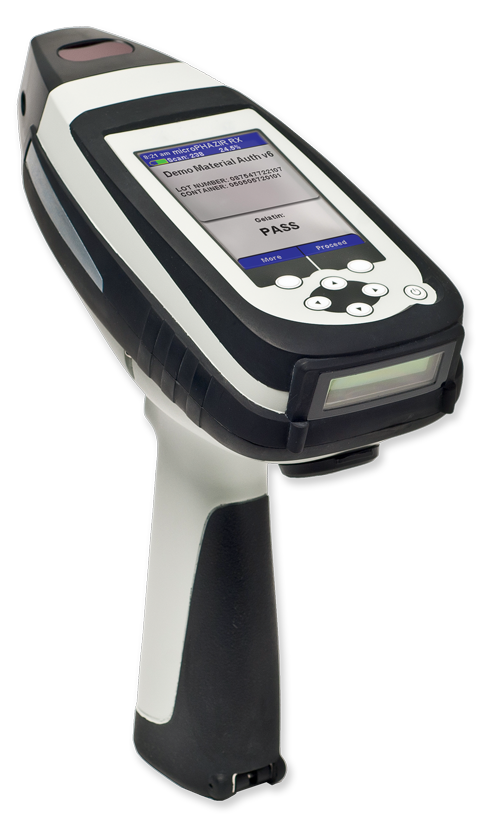
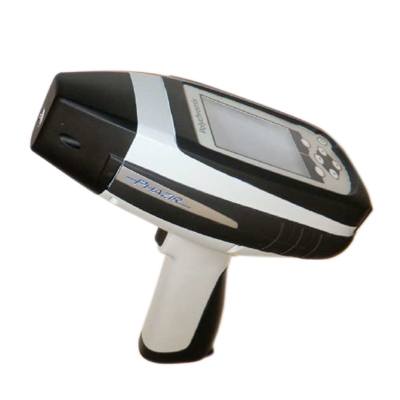
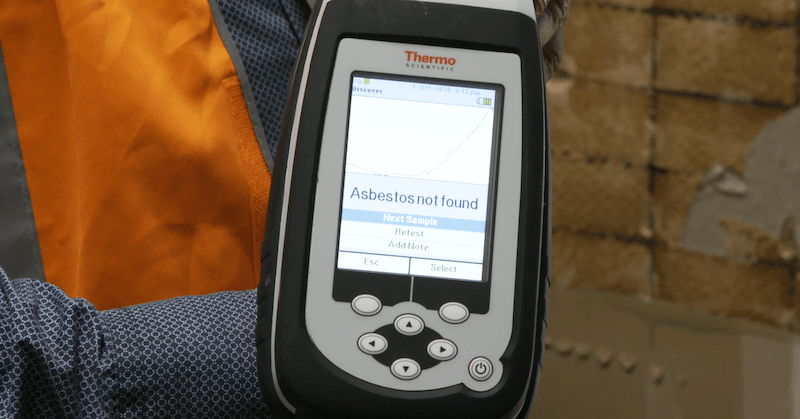
The microPHAZIR AS enables powerful, in-field rapid screening and identification of six types of regulated asbestos fibres using non-destructive analysis through NIR technology.

MicroPHAZIR AS Asbestos Analyser
microPHAZIR AS 1

Fast, accurate asbestos detection saves lives.

The microPHAZIR AS enables powerful, in-field rapid screening and identification of six (6) types of regulated asbestos fibres using non-destructive analysis through NIR technology.

Currently, asbestos detection is limited to accredited lab-based analysis such as polarised light microscopy, transmission electron microscopy and x-ray diffraction. These lab-based tests can be costly and time consuming.

Portable Analytical Solutions is proud to bring this critical solution for portable asbestos analysis to the competitive construction, environment and waste management industries.

  • Weighs 1.25kg
  • Point and shoot operation
  • Results in under 10 seconds, stored on-board until later download
  • Reliable analysis of 6 types of asbestos fibres

Key Applications for microPHAZIR AS

Environmental / Waste Management / Construction / Government Regulation

Speak to PAS for expert guidance about the Thermo Fisher microPHAZIR AS.

MicroPHAZIR device
MicroPhazir PC Side Shot
MicroPHAZIR AS Benefits:
  • Achieve real time, reliable decisions, on site
  • Avoid costly unnecessary shutdowns and business interruption
  • Empower non-experts to perform safe testing for immediate feedback
  • Exercise duty of care for workers, the public and environment
  • Short term ROI Recovery by avoiding costly errors

Growscreen Rhizo

Lemnatec™ Growscreen Rhizo

Portable Analytical Solutions

growscreen rhizo

A combined root and shoot phenotyping solution for glasshouses, growth rooms, climate chambers, cultivation halls, or indoor farms

Challenges in root phenotyping

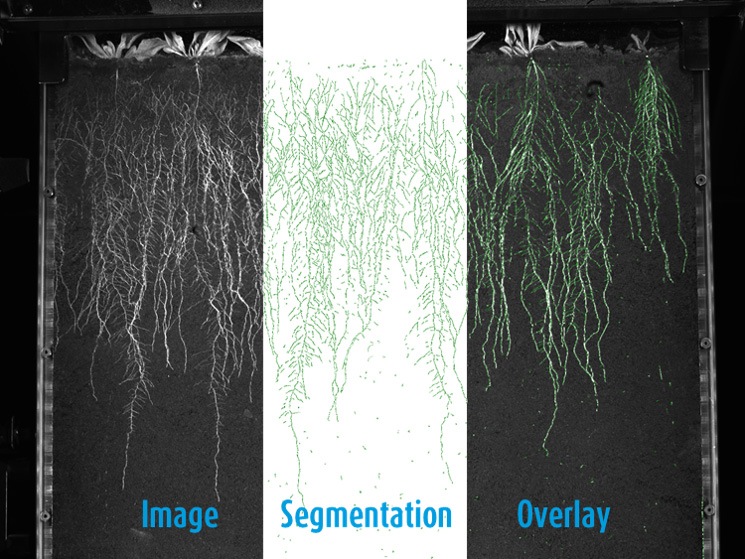
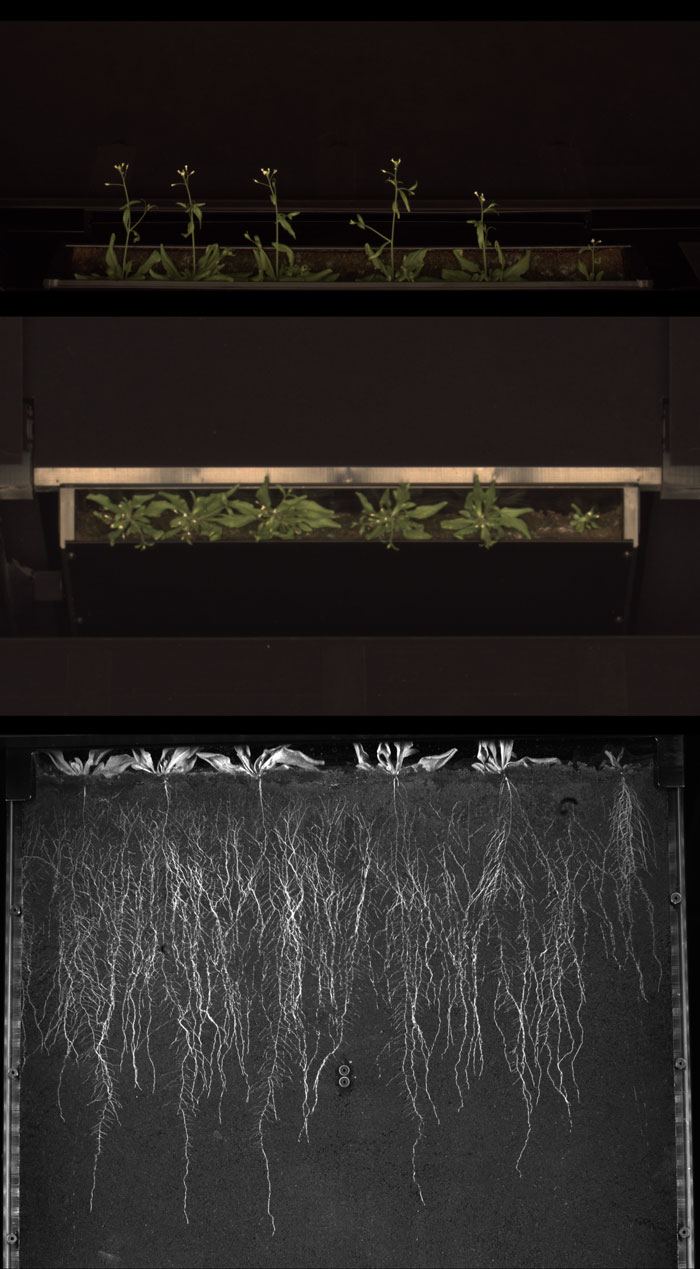
While most phenotyping solutions focus on above-ground traits of the plants, roots are usually hidden in soil and thus not accessible to measurements. To make them visible, specific cultivation measures are available. The Growscreen Rhizo uses soil-filled rhizoboxes placed at 45° angle that have a transparent plate where roots are visible for image recording. In collaboration with and under licence of the Forschungszentrum Jülich, LemnaTec offers the Growscreen Rhizo as combined root-and shoot- phenotyping system. Core component is an image acquisition cabinet with high-resolution cameras focused on the roots and the shoots of the plants. Thereby, classical shoot imaging is done simultaneously with precision root imaging. The cabinet is also equipped with dedicated illumination to enable optimal image recording.

Advantages of Growscreen Rhizo

We offer an automated root and shoot phenotyping system for soil-based systems that is superior to other methods that use artificial media for plant growth.

  • Roots in soil – no artificial media required
  • Soil-filled rhizoboxes at 45° angle
  • Non-destructive – access to roots without digging or washing
  • Time-course studies
  • Root- and Shoot data for each plant
  • High-resolution root imaging
  • High-resolution shoot imaging
  • Advanced analytical software, machine learning algorithms available
  • Weighing and watering option
  • Automation options

Technological features

Roots and shoots of the growing plants are imaged with industry-grade high-resolution cameras, combined with advanced light technology that allows reflection-free image recording.

A balance and water supply system can be mounted for precise control of soil water content, enabling growth scenarios with different water availability.

Automation technology is available to move in and out the rhizoboxes so that experiments with repeated time-course measurements can be planned. Automation can be done with conveyer-based systems or with magazine automation technology, depending on the local requirements.

Software tools give access to shoot- and root- phenotypic traits such as growth and morphology. Root systems are characterised for root system depth and width and for spatial root distribution, together with root length and width data, rooting angles or total root area. Shoot systems are analysed for height, width, area, and morphological factors, together with colour data.

We recommend to record environmental data in the plant growth area, such as temperature, light, or air humidity. We offer recording systems that store the environmental data together with the phenotypic data of the corresponding plants.


For more details, download the brochure

growscreen rhizo segmenting
growscreen rhizo Arabidopsis compositionf

For more details, download the brochure

Canopy Scanalyzer

Lemnatec™ Canopy Scanalyzer

Portable Analytical Solutions

growth chamber canaopy scanalyzer
industrial greenhouse

Canopy Scanalyzer solutions for glasshouses, growth rooms, climate chambers, cultivation halls, or indoor farms

Automated high-throughput Canopy Scanalyzers combine rapid automated data recording with advanced analytical software and machine learning.

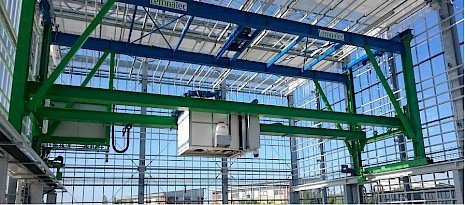
LemnaTec is the global specialist for automated Scanalyzer Solutions that not only save time and labour, but also provide a much broader base of information compared to visual scoring. The Canopy Scanalyzer technology is dedicated to users who work with ground-standing plants – directly in soil, in containers, or pots – that are not movable, or not intended to move. The sensor-to-plant system records imaging data from above the plants, and usually delivers data on plant canopies rather than on individual plants.

  • Sensor to plant
  • Sensors mounted on gantry structure that moves across plant area
  • Fixed plant positions
  • Broad range of imaging and sensing modules
  • Dedicated optics and illumination
  • Available for a range of dimensions
  • Sensing equipment in a sensor bay mounted on the gantry or sensor exchange system

We recommend to record environmental data in the plant growth area, such as temperature, light, or air humidity. We offer recording systems that store the environmental data together with the phenotypic data of the corresponding plants.


For more details, download the brochure

Field Scanalyzer

Lemnatec™ Field Scanalyzer

Portable Analytical Solutions

Field Scanalyzer 3

AUTOMATED OUTDOOR PHENOTYPING

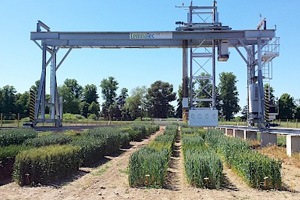
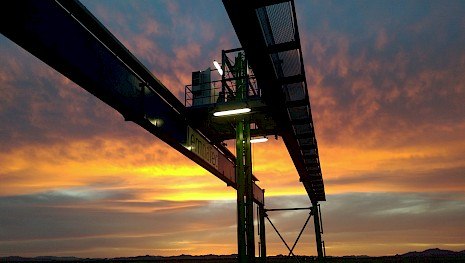
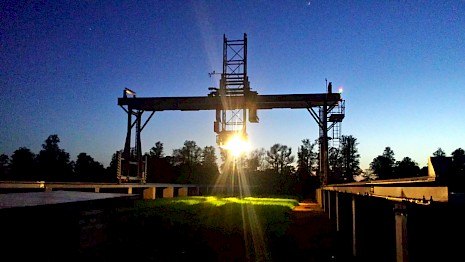
The Field Scanalyzer Gantry System is a 3-axis sensor-to-plant phenotyping system. The design and construction bases on an industrial portal crane system. The x-axis is guided along a rail system underpinned by concrete piles driven into the ground so as to allow natural drainage and no impediments as traditional concrete footings may act as flow barriers. In x-direction, length is only limited by the cabling requirements; one of our customer installations reaches 500 m length. The y axis is orthogonal to the rails and bears the lifting unit for the container with the sensing equipment. In y-direction customised width, e.g. 10 m, 20 m or 30 m is possible to span over a given growth area. The z axis serves to lift up and down the container with the sensor equipment.
This setup will allow a precise movement of all 3 axes throughout the year. The sensor box can reach each point of the measuring area in pre-defined schedules with repeatable high precision in the sub-centimetre range.
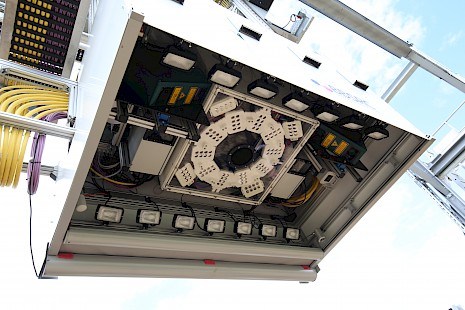
The system carries a sensor box for phenotyping sensors and environmental sensors. Any of the camera system will be housed in a separate weather sealed housing and mounted on a flexible and adjustable platform within the imaging box. The total payload of the camera box can reach up to 500 kg allowing full flexibility for future adjustments and expansions of the sensor platform. The weather shielding of the sensor box protects the electronic equipment during harsh weather. This comprises a roller door at the down facing side of the platform to fully protect the sensors while not in use.
Having environmental sensors on board, the Field Scanalyzer records climatic data during all phenotypic measurements so that users find phenotype and environment data linked in the database.

field scanalyzer
Field Scanalyzer 4
field scanalyzer aerial picture
agricultural field harvesting

Conveyor Scanalyzer

Lemnatec™ Conveyor Scanalyzer

Portable Analytical Solutions

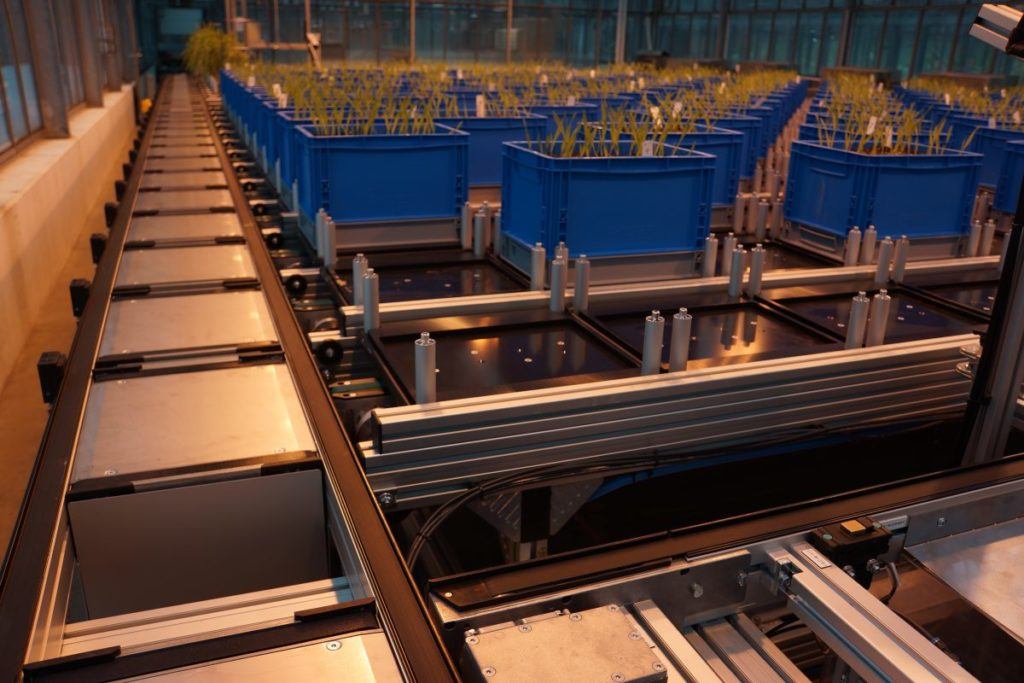
conveyor scanalyzer lemnatec greenhouse

Conveyor-based Scanalyzer Solutions for glasshouses, growth rooms, climate chambers, cultivation halls, or indoor farms.

Automated high-throughput Conveyor Scanalyzers combine rapid automated data recording with advanced analytical software and machine learning.

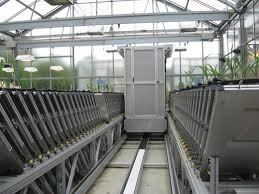
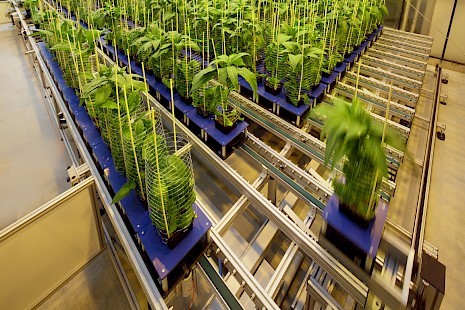
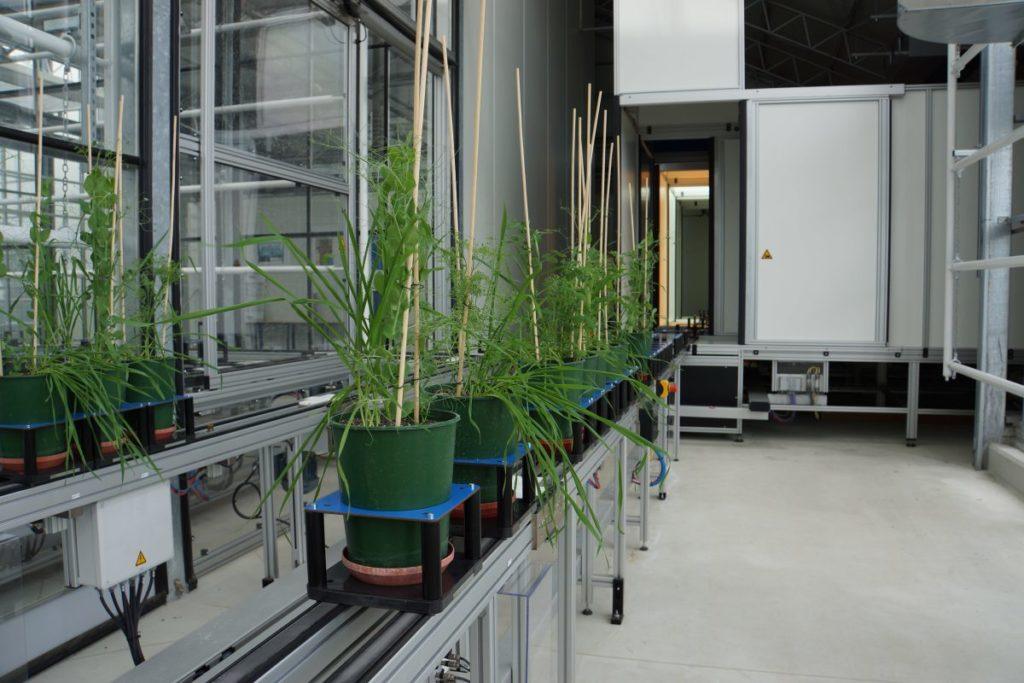
LemnaTec is the global specialist for Conveyor Scanalyzer Solutions that not only save time and labour, but also provide a much broader base of information compared to visual scoring. This technology is dedicated to users who work with individually potted plants and demand for side- and top-view images of their plant material.

  • Plant-to-Sensor
  • Potted plants moving on conveyors
  • Handling conveyor loops for imaging, weighing, watering
  • Storage conveyor lines as growth area
  • Imaging cabinets with advanced illumination and optics
  • Broad range of cameras
  • Conveyor configurations according to application cases
  • Weighing and Watering options
  • Plant carrier re-positioning and randomising

We recommend to record environmental data in the plant growth area, such as temperature, light, or air humidity. We offer recording systems that store the environmental data together with the phenotypic data of the corresponding plants.

For more details, download the brochure

conveyor scanalyzer lemnatec greenhouse
conveyor scanalyzer lemnatec

PhenoTron

Lemnatec™ PhenoTron

Combined Phenotyping and Growth Cabinet

Portable Analytical Solutions

Lemnatex phenotron

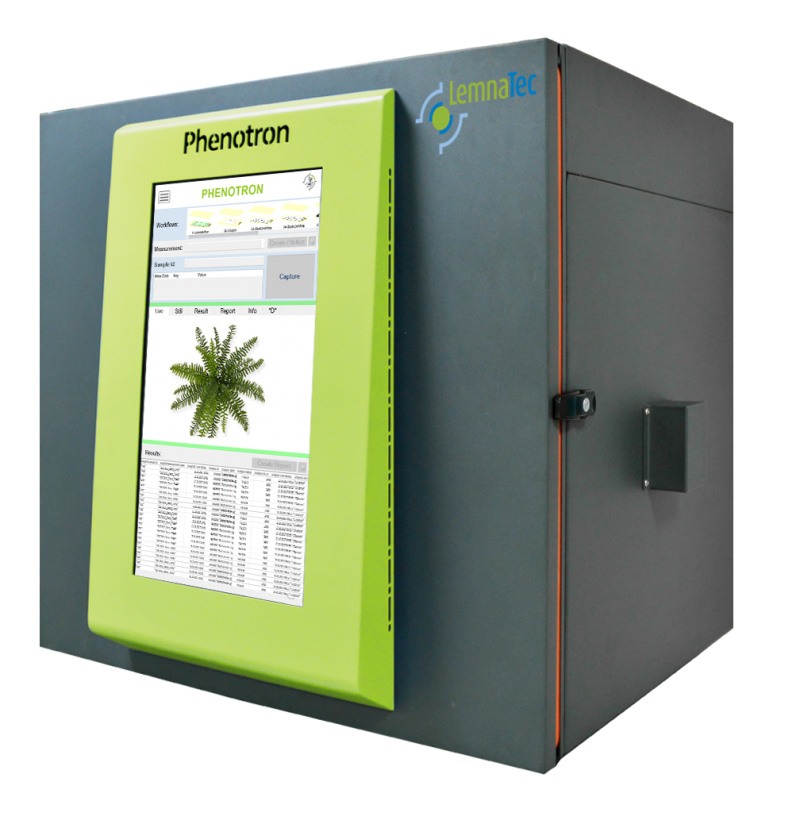
The LemnaTec PhenoTron is a versatile instrument for a broad range of phenotyping applications in laboratories.

It combines the imaging and image processing capabilities of a LabScanalyzer with the advantages of a climate-controlled growth cabinet. Thus, prime sample types are such that require environmental control during the phenotyping process, such as seeds or seedlings that are observed in continuous time series. Imaging of samples that do not stay continuously in the cabinet is equally possible. Thus, the PhenoTron allows imaging of many different types of biological samples including plants as well as samples in plates:

  • Seedlings and small plants in pots or small trays
  • samples in microtiter plates or petri-dishes, e.g. seeds, leaf disks, insects
  • samples in beakers, e.g. duckweed for ecotoxicology testing
  • detached plant parts, e.g. leaves, fruits, roots, tubers

The core compartment of the LemnaTec PhenoTron consists of a climate controlled growth chamber (15°C to 40°C ± 3°C) with tunable LED light sources. It has up to 16 groups of LEDs in different spectral bands between 350 and 850 nm, which can be controlled independently. Top stereo RGB cameras deliver data for many phenotyping applications. The system is operated via a touch-screen interface with intuitive controls.

PhenoTron configuration
PhenoTron cabinetH: 870 mm
W: 880 mm
D: 680 mm
Temperature controlControl of air temperature: 15°C to 40°C ± 3°C
RGB cameraVisible light imaging for count, size, morphology and colour of the objects

HyperAIxpert

Lemnatec™ HyperAIxpert

Portable Analytical Solutions

lemnatec phenocenter hyperaixpert
hyperaixpert logo

The most flexible multi-sensor laboratory phenotyping system for Arabidopsis, seedlings, petri dishes, MTPs, and many more sample types.

  • Rapid digital analysis of phenotypic traits
  • Large set of sensor options
  • Advanced analytical software and machine learning
  • Standardized and repeatable data acquisition
  • High throughput
  • Pots, trays, dishes, MTPs, beakers
  • Adaptors for many sample types
  • Up to 40 cm sample height with manual loading
  • Up to 20 cm with automated sample loader

Features:

  • Experiment-driven design
  • High-resolution phenotyping
  • Comprehensive machine-learning based analytical software
  • All major phenotyping cameras and sensors available
  • Configurable multi-sensor imaging
  • Automatic sample loading available
  • Integrable into climate chambers
lemnatec phenocenter hyperaixpert

SeedAIxpert

Lemnatec™ SeedAIxpert

Portable Analytical Solutions

lemnatec seedaixpert seeds example
seed aixpert
seed aixpert

The fastest digital seed testing system measuring seed, germination, and seedling emergence quality.

  • For paper-based germination assays and seedling emergence tests
  • Save time and labor in seed testing
  • Overcome inconsistent assessments by digitizing the inspection
  • Reproducible and standardizable through unified imaging and analysis
  • The digital seed testing system for breeders, testing labs, and researchers

Features:

  • Reliable technology that makes seed testing easy
  • Image acquisition, storage, analysis, and retrieval
  • Image annotation, metadata recording
  • Metadata and annotation directly linked to image
  • Advanced image processing algorithms including machine learning
  • Structured image file administration system
  • Easy export of images, data, and analyses
  • Intuitive graphical user interface
  • High-resolution industrial camera
  • Artificial intelligence enables seed and seedling quality assessments

For more details, download the brochure

lemnatec seedaixpert seeds example

PhenoAIxpert

Lemnatec™ PhenoAIxpert

Portable Analytical Solutions

lemnatec phenoaixpert logo
lemnatec phenoaixpert

The versatile phenotyping system for laboratories – your entry to the phenotyping world.

  • For many sample types in plant research, breeding and beyond
  • Save time and labor in phenotyping
  • Application-oriented analytical workflows
  • Reproducible and standardizable through unified image and information storage, and analyses
  • The laboratory phenotyping system is available in three models – PhenoAIxpert, PhenoAIxpert Pro, PhenoAIxpert Root

Features:

  • Reliable technology, advanced image processing
  • Image acquisition, storage, and analysis
  • Image processing algorithms, optional machine learning
  • Metadata, annotation, and analysis directly linked to image
  • Structured image file administration system

For more details, download the brochure

lemnatec phenoaixpert