Notice: PAS has relocated to Unit 1, 11 Pinnacle Place, Somersby NSW 2250

Portable analytical Solutions logo
Malvern logo

Malvern Panalytical Scientific Award 2023

Our 2023 Scientific Award is now open – and there’s a €5,000 prize for the best entry.
Entries close August 31st – you’ve still got time!

Comments regarding QLD Safety Alert of the use of NIR Spectrometers

Comments regarding QLD Safety Alert of the use of NIR Spectrometers

Recently the QLD government posted a Safety alert regarding the use of NIR spectrometers for the identification of Asbestos containing materials. As we feel the alert was focused at the Thermo Scientific MicroPHAZIR AS spectrometer, we consider it is best to clarify the situation from our perspective.

Firstly, and most importantly; PAS agrees with the comment made in the alert that the only approved method noted in the Queensland Work Health and Safety Regulation 2011, is that samples need to be analysed by a NATA accredited Laboratory using a PLM technique referred to in AS 4964-2004. As our customers and potential customers have been made aware, the microPHAZIR AS is not intended to be used to replace laboratory sampling methods, as at this time, it is not an approved method.

Both the manufacturer and PAS have carried out extensive internal and independent testing through groups such as KIWA laboratories in Europe, these tests have satisfied many of our local and state governments, emergency response departments and private sector customers throughout Australia and New Zealand, who have been using the MicroPHAZIR AS as a support tool in their working environments for a number of years.

In a meeting recently held with a representative of the QLD government, it was indicated to PAS that more peer-reviewed literature was required,especially around the performance of the new,improved version 5 MicroPHAZIR AS system. PAS has taken this advice and through our in-house Asbestos expert Dr Jimmy Bester, started to work on having these Peer-reviewed papers prepared through local University teams.

PAS is committed to complying with local laws and regulations, and working with industry to improve the safety of workers, and the public through the innovation of instrumentation such as the MicroPHAZIR AS. If you have any questions, please feel free to contact me directly on 02 43812844.

Paul Martin

Managing Director

Portable Analytical Solutions Pty Ltd

Headwall & Israel Aerospace Industries (IAI) Awarded Contract for High-Endurance Fixed-Wing Hyperspectral Imaging UAV for Wide Area Precision Agriculture

Headwall & Israel Aerospace Industries (IAI) Awarded Contract for High-Endurance Fixed-Wing Hyperspectral Imaging UAV for Wide Area Precision Agriculture

Project funded in part by the BIRD (Binational Industrial Research and Development) Foundation

Bolton, MA – August 1, 2019 –Headwall, the industry leader in turnkey hyperspectral imaging solutions for remote sensing and precision agriculture, and Israel Aerospace Industries (IAI), a leader in UAV technology, announced that a project valued at approximately $1 million USD for large-scale precision agriculture has been awarded by the Binational Industrial Research and Development (BIRD) Foundation to develop a high endurance UAV and hyperspectral imaging solution for agricultural customers with thousands of hectares of crops.

Development of the Precision Agriculture Decision Support System will utilise a custom-designed and manufactured wide-area hyperspectral imaging payload and a fixed-wing UAV designed for beyond visual line of sight (BVLOS) missions, as well as analytics that allow accurate assessment of crop and soil conditions as well as crop disease over a wide area with high resolution and positional accuracy.

“Headwall has always strived for commercialisation of advanced spectral imaging technology for the benefit of customers worldwide,” David Bannon, CEO of Headwall commented. “IAI combines rugged and reliable military technology with commercial know-how for this project to assist farmers with decisions based on comprehensive yet rapid reports made possible by our sensor systems. Deployment of high endurance solutions for wide area data acquisition integrated with advanced hyperspectral and multispectral sensors is a game changer for the agriculture industry”.

Projects submitted to the BIRD Foundation are reviewed by evaluators appointed by the U.S. National Institute of Standards and Technology (NIST) and the Israel Innovation Authority.

Dr. Amiram Appelbaum, Chief Scientist at the Ministry of Economy and Industry, Chairman of the Israel Innovation Authority and co-Chairman of BIRD’s Board of Governors said, “The U.S. is one of Israel’s major partners for innovation. We are proud of our long-standing collaboration with the BIRD Foundation that has resulted in such spectacular successes over the decades and numerous groundbreaking technological innovations offered by both Israeli and U.S recipients of the grant. We are confident that this year’s grant recipients in the various fields and the new projects approved will prove vital for the population worldwide.”

About Headwall

Headwall Photonics is a leading designer and manufacturer of spectral instrumentation for remote sensing, advanced machine vision, and government/defense markets. With a worldwide base of end-user and OEM customers, Headwall enjoys a market leadership position through the design and manufacture of spectral solutions that are customised for application-specific performance. The Company is based in Massachusetts where it has two locations (Bolton and Fitchburg). European operations (Headwall BVBA) are located near Brussels, Belgium.

About IAI

Israel Aerospace Industries (IAI) is a leader in both the defense and commercial markets, delivering state-of-the-art technologies and systems in all domains – providing customers with tailored, cutting-edge solutions in the unique challenges that they face. IAI provides a wide range of solutions and services from special mission aircraft to advanced unmanned aerial systems (UAS).

About the BIRD Foundation

The BIRD (Binational Industrial Research and Development) Foundation works to encourage and facilitate cooperation between U.S. and Israeli companies in a wide range of technology sectors and offers funding to selected projects.

Niton™XL2 Precious Metals

Niton™XL2 Precious Metals 1

Niton™ XL2 Precious Metal Analyser

Thermo Fisher Scientific – XRF

Perform precious metal testing with certainty

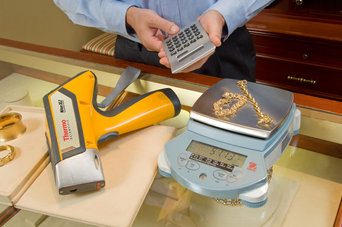
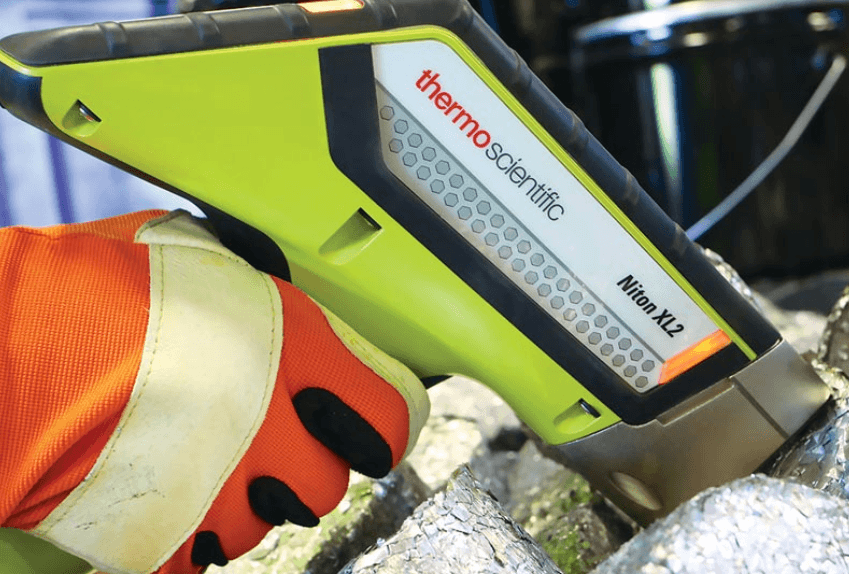
With the volatility and high price of gold, failing to detect just a small variation in composition can be an expensive mistake. The Thermo Scientific™ Niton™ XL2 XRF Precious Metal Analyser provides a fast, accurate, and most importantly, nondestructive method to test the purity and chemistry of all precious metals. The Niton XL2 XRF Precious Metal Analyser quickly detects gold plating and counterfeit gold and gives you the exact elemental composition of jewellery and coins so you can be absolutely certain of the value of the precious metals you buy and sell.

  • Easier, faster and more accurate than nitric acid test methods.
  • Faster, more comprehensive analysis than fire assay with comparable accuracy.
  • Efficiently identify most gold-plated items with Thermo Scientific AuDIT™ gold-plating detection technology.
  • Precisely determine the presence and concentration of other trace alloying elements and dangerous heavy elements, which could impact valuation and future refining needs.

Key Features Of the Niton XL2

  • Standard analytical range: >25 elements from S to U (varies by application).
  • Point and shoot simplicity—very easy to use even by nontechnical personnel.
  • Ideally suited for retail environments.
  • Nondestructive analysis with near-instantaneous results.
  • Ergonomic design.

Speak to PAS for expert guidance about which Thermo Fisher Niton XL2 best suits your application and particular conditions.

Niton™XL2 Precious Metals 1
PXRF In The Field
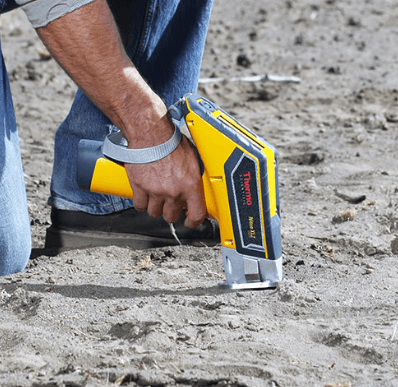
Man testing gold and precious metals with handheld XL2 analyser
XRF is a boon to gold exploration

Hyperspec VNIR – SWIR Co-Aligned

Hyperspec VNIR – SWIR Co-Aligned

Headwall Photonics –Spectral Imaging

Headwall Hyperspec - Co-Aligned VNIR-SWIR

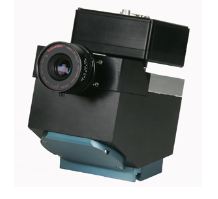
Headwall’s Co-Aligned Dual VNIR-SWIR sensor package with co-aligned pixels for superb imaging performance from 400-2500nm.

Headwall’s VNIR-SWIR imaging sensor leverages a patented aberration-corrected design that provides very high spectral and spatial resolution with stable measurement accuracy. With diffractive optics specifically designed and manufactured by Headwall, the dual hyperspectral sensors do not exhibit image aberrations such as stray light, optical distortions, or thermal instabilities. Along with aberration-corrected imaging, the Hyperspec VNIR-SWIR sensor package offers a wide field of view and high signal-to-noise (SNR) performance. Pixels from both sensors are co-aligned through software.

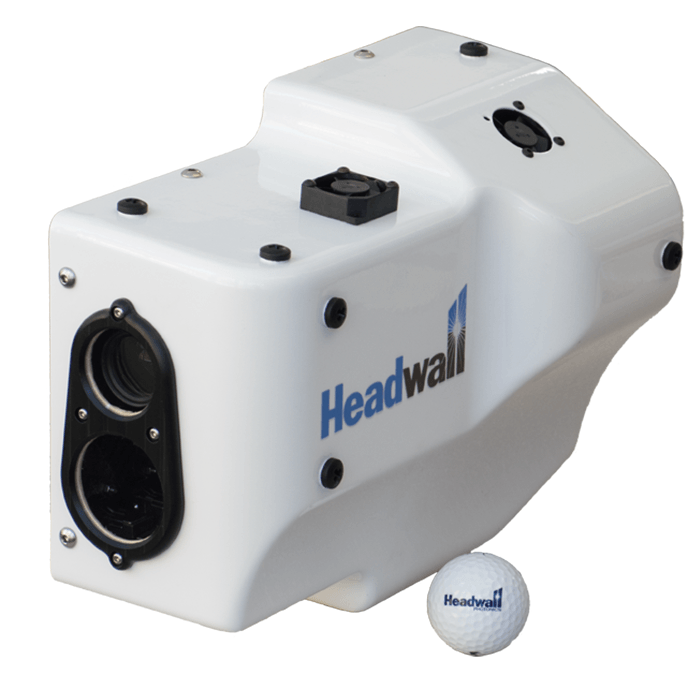
Headwall’s Hyperspec® VNIR-SWIR sensor provides image data across the broadband range of 400-2500nm, reducing processing times and yielding superior imaging performance. A CMOS FPA is used for the VNIR sensor while a cooled MCT array is used for the SWIR sensor. Inside the enclosure is a high-accuracy GPS/IMU plus the data storage and processing computer. Headwall’s VNIR-SWIR airborne sensor package measures approximately 10.7” x 8.2” x 6.5” in size (272mm x 208mm x 165mm) and weighs approximately 6.25 lb. (2.83 kg), making it suitable for aircraft and certain UAVs.

Key Benefits

  • Superb imaging performance
  • Wideband coverage
  • Pixel co-alignment through software
  • Small form-factor, lightweight
  • Robust and environmentally rugged
  • Aberration-corrected
  • High spatial and spectral resolution
  • Wide field-of-view

How to Apply the HyperSpec Co-registered

Airborne Remote Sensing / Mine Mapping / Precision Agriculture / Minerals & Mining Exploration / Environmental Monitoring / Petroleum & Pipeline Monitoring

Speak to PAS for expert guidance on hyperspectral imaging options from Headwall Photonics.

Hyperspec VNIR - SWIR Co-Aligned 3
Hyperspec VNIR - SWIR Co-Aligned 4

VNIR-SWIR Co-Aligned + Internal Data Storage + GPS-IMU

Niton™ XL2

Niton™ XL2 & XL2 Plus Analysers

Thermo Fisher Scientific – Portable Handheld XRF

Niton™ XL2 Plus Analyser

xl2 Plus Powerful Handheld instrument that identifies metal alloys and mineral ores

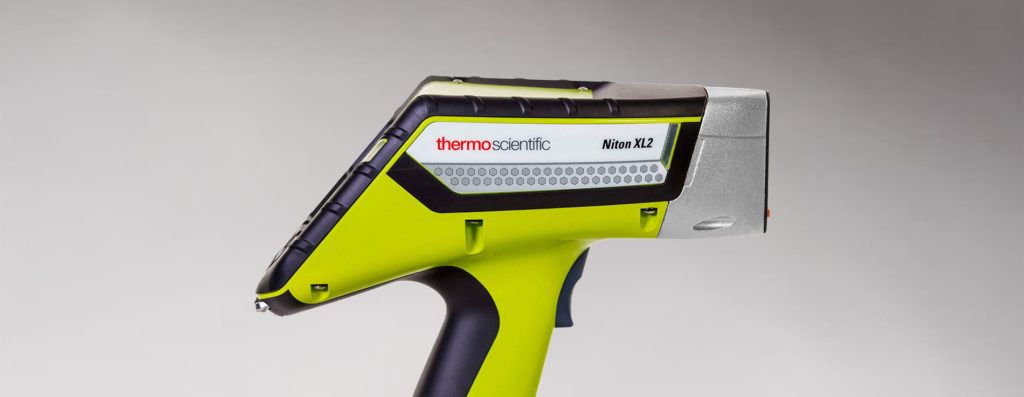
The Niton XL2 Plus is a tough, powerful, handheld instrument for identifying metal alloys and mineral ores easily in the field.

The XL2 Plus is the latest in the XL2 product range of Portable X-Ray fluorescence analysers (PXRF). There are two models: XL2 980 Plus is calibrated for metals, and XL2 950 Plus for mining.

The XL2 Plus can identify Niobium in Titanium alloys down to 200 ppm and more generally, elements from Magnesium to Uranium, down to 20 ppm in some common alloys.

Key Applications for the Niton XL2 Plus

General Metal / Ore / Lead Contamination / RoHS / Alloy / Mine Management / Scrap Recycling / Waste / Hazmat

Speak to PAS for expert guidance about which Thermo Fisher Niton XL2 best suits your application and particular conditions.

Niton™ XL2 5
The XL2 Plus easy in-field identification of metal alloys and mineral ores
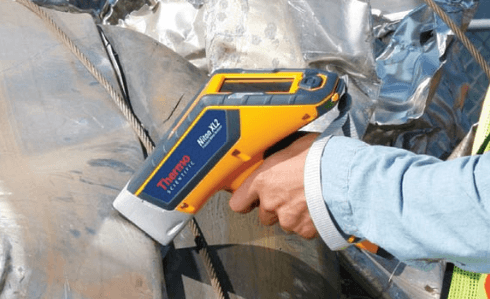
Niton XL2 Plus 1 analysing metal alloys
Niton XL2 Interface
Features & Benefits:
  • IP Certified (Splash/ Dust Proof)
  • Detector ProGuard Protection
  • 2W X-Ray Tube
  • Silicon Drift Detector
  • Micro Camera
  • Hot Swap Battery
  • Touch Screen and Directional Keys
  • Password Protected Security
  • Nose Cone Alignment Guides

Niton™ XL2 Analyser

Get fast, accurate analysis for manufacturing quality assurance with the Niton XL2 Analyser.

With four models in the range, the XL2 Portable XRF Analyser provides immediate, nondestructive elemental analysis for a wide range of applications including scrap metal identification, mining and exploration, and lead screening for consumer and electronic goods.

It can detect  alloy materials from titanium to nickel as well as tramp and trace element analysis. The XL2’s standard analytical range spans up to 30 elements from sulphur to uranium.

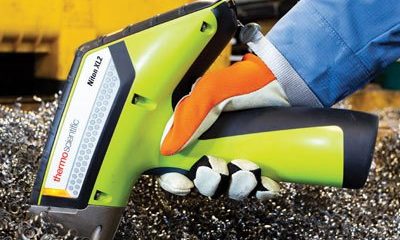
Lightweight, rugged handheld Niton Portable XL2 Analysers is built for the harsh conditions it will face:

  • Sealed against moisture and dust.
  • Ergonomically designed.
  • Daylight-readable icons on colour, touch-screen display.

Key Applications for the Niton XL2

General Metal / Gold / Ore / Lead Contamination / RoHS / Alloy / Mine Management / Waste / Hazmat

Speak to PAS for expert guidance about which Thermo Fisher Niton XL2 best suits your application and particular conditions.

Niton XL2 In Field -2 elemental analysis
Man testing gold and precious metals with handheld XL2 analyser
Niton XL2 - In Field general metal analysis

Differences Between The Niton™ XL2 and Niton™ XL2 Plus

Whilst the Niton XL2 and the Niton XL2 Plus portable XRF units are similar, both units are suited to different applications. Due to a difference in analytical source between the units, the elemental range that can be detected is different. The XL2 Plus also features additional benefits like a swappable battery.

Niton™ XL2

Analytical source: 2W X-Ray Tube, and SI-PIN detector

Elemental Range: Ti-Bi

Features: Fixed Angle touchscreen display, micro camera, bluetooth

Niton™ XL2 Plus

Analytical source: 2W X-Ray Tube, and Silicon Drift Detector (SDD)

Elemental Range: Mg-U

Features: Fixed Angle touchscreen display, micro camera, Bluetooth, swappable battery, IP54 rating for water and dust resistance, detector protection.

Headwall Photonics Increases It’s Visibility

Headwall Photonics

A vibrant new website from Headwall Photonics highlights even more clearly its impressive array of industry-leading spectrometry instrumentation and brilliant industry solutions.

Catering for diverse applications across Remote Sensing, Advanced Machine Vision, Medical/Biotech and Defense/Government, the new site provides greater ease of navigation.

This enables site visitors to quickly appreciate how Headwall’s range of products correspond with specific demands for data capture, management and analysis.

Headwall’s Spectral Imaging Sensors are used EVERYWHERE!

PAS is excited about the benefits of the new site for our customers who may be time-poor, overloaded with information and working on a deadline.

One valuable page on the new site is Published Research which catalogues selected scholarly articles demonstrating some of the myriad of applications for spectral instruments.

“These papers describe just a sampling of the fascinating applications using Headwall’s hyperspectral and multispectral imaging sensors,” the page reads. “From remote sensing and medical/biotech to cultural preservation and food inspection, Headwall is THE industry leader in spectral imaging solutions.”

Access Headwall through Portable Analytical Solutions

PAS has been the Australia / New Zealand distributor of Headwall spectral imaging including the award-winning Hyperspec® instruments since 2013. We provide sales support, service and training for these application-specific, rugged and versatile analysers.

Contact PAS about these key products

Headwall Nano Hyperspec On DJI
Headwall Hyperspec Nano
Headwall Hyperspec Nano With Vector Nav

Precision Ag history heralds bright future

Over the past two decades, precision ag history has been marked by rapid development and positive outcomes.

Precision ag has become, well, much more precise.

According to David Mulla from the University of Minnesota, USA, in his article on Precision Ag history, “Spectral bandwidth has decreased dramatically with the advent of hyperspectral remote sensing, allowing improved analysis of specific compounds, molecular interactions, crop stress, and crop biophysical or biochemical characteristics.“

Portable Analytical Solutions has relished our partnership with spectrometry specialist Headwall Photonics as we equip agribusiness with higher-quality data and more sophisticated planning and risk reduction. The result has been greater profitability, identification and mitigated risk and increased crop security.

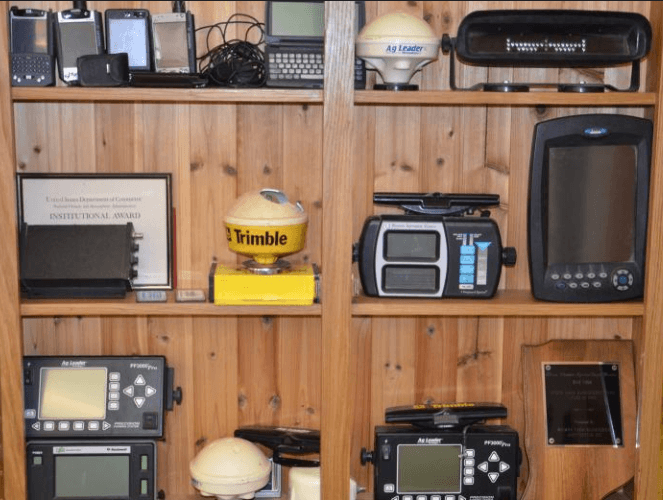
This 2017 slideshow gallery includes actual product used by Jeff Boyer, superintendent of the Davis-Purdue Agricultural Center near Farmland, Indiana, USA.

Do any of these ‘museum exhibits’ look familiar?

If you are more interested in the future of precision ag, remote sensing or groundtruthing, speak to PAS today.

Innovator walks through history of precision agriculture

Case Study – Hyperspectral Imaging Fights Citrus Blight

Precision Ag Case Study

Hyperspectral Imaging Fights Citrus Blight

How can hyperspectral imaging make a difference to precision agriculture? Consider this example of a US project to inspect orange groves, looking for citrus blight disease, which used a Headwall Photonics’ Hyperspec® VNIR hyperspectral solution with an OEM camera mounted on a UAV.

VNIR hyperspectral imagery for valuable data quality

Citrus blight destroys the vitality of trees and can spread throughout the grove. One of the early signs of this disease is a byproduct secreted on the surface of the leaves. Inspection for this used to require a person climbing a ladder to inspect the top of each tree. More often, growers might not know of a problem until trees started dying.

With hyperspectral imaging, this can be seen 300-400 meters above the crops covering a large area quickly (mounted on UAVs), allowing quick action to eliminate the spread and minimise the destruction.

Had only multispectral sensing been employed, this level of detail would not have been available and the correct decisions would not have been taken. Crop loss due to disease, such as citrus blight, and inaction leads to the loss of millions of dollars and the loss of a whole season in many cases.

PAS is the exclusive distributor of Headwall’s range of industry-leading hyperspectral solutions, and customises them for the demands of specific applications.

Precision ag: Multi Spec Vs Hyperspec

What’s the difference between multispectral and hyperspectral?

Imagine we could safely view the world through the eyes of different creatures, enabling us to view infrared radiation, ultraviolet light and reflected electromagnetic energy*. Well, we can, with the use of multispectral and hyperspectral sensors.

Each technology is able to sense (“see”) outside the range of normal human vision. The difference is the number of bands and the narrowness of the bands.

Multispectral imagery generally refers to 3-10 wide bands, using a remote sensing radiometer.

Hyperspectral imagery consists of many more bands (hundreds or thousands) that are much narrower (10-20nm), using an imaging spectrometer.


Multispectral vs Hyperspectral Imagery Explained

Why does it matter for precision ag?

It’s a question of detail.

The more detailed the spectral information recorded by a sensor, the more information that can be extracted from the spectral signatures.

Hyperspectral sensors have much more detailed signatures than multispectral sensors and thus provide the ability to detect more subtle differences in aquatic and terrestrial features.

Consider this example about a US project to inspect orange groves, looking for citrus blight disease, which used a Headwall Photonics’ Hyperspec® VNIR hyperspectral solution with an OEM camera mounted on a UAV.

Citrus blight destroys the vitality of trees and can spread throughout the grove. One of the early signs of this disease is a byproduct secreted on the surface of the leaves. Inspection for this used to require a person climbing a ladder to inspect the top of each tree. More often, growers might not know of a problem until trees started dying. With hyperspectral imaging, this can be seen 300-400 meters above the crops covering a large area quickly (mounted on UAVs), allowing quick action to eliminate the spread and minimise the destruction.


Precision ag: Multi Spec Vs Hyperspec 6

For precision ag, the more detail, the better.

Imagine flying over a property and looking down at fields of different colours and appearance. You might decide you know what is planted in each paddock, with accuracy dependent on how low you are flying.

With multispectral detection, you would certainly be able to see differences between various elements, such as a tree plantation versus another crop.

With hyperspectral capabilities, you will see individual trees and plants, and even the subtle differences in the EMR emitted by disease and soil moisture levels etc.

In its 2017-2019 Strategic Plan, the NSW Department of Primary Industries’ first goal is Innovation in primary industries to improve resilience and boost productivity.

There is no doubt that hyperspectral imagery is the most advanced precision ag solution to transform our analysis and optimisation of production, risk management, use of resources and reducing disease.


Talk to PAS about the possibilities for the use of hyperspectral solutions in your agricultural context.


  1. https://gisgeography.com/multispectral-vs-hyperspectral-imagery-explained/
  2. https://www.adimec.com/how-is-hyperspectral-imaging-advancing-agriculture/

Coastal Exploration and Spectral Vision

Coastal Exploration with Hyperspectral Imaging

Valued PAS customer, Queensland University of Technology is using Headwall’s hyperspectral sensors to examine the beautiful Ningaloo Reef on Western Australia’s mid-north coast which has received a very positive conservation rating from World Heritage Outlook.

When UNESCO reported last year that the world’s coral reefs were likely to disappear by 2100, many Australians saw the need for immediate action. Thanks to cutting-edge analytical methods, scientific coastal exploration is well-advanced in understanding this critical problem.

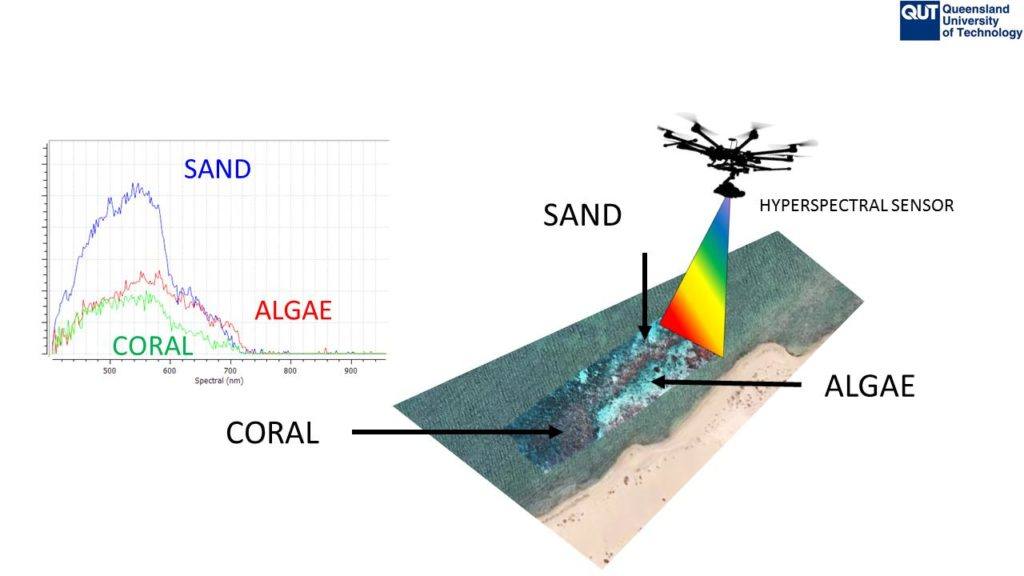
QUT scientists have clear vision of environmental changes in the coral, scanning 40 hectares of Ningaloo Reef, the largest existing fringing reef in the world, in only 30 minutes,100 metres above the surface, providing data to retain the health of the reef which hosts numerous marine species.

Advanced coastal exploration provides data to mitigate problems as they emerge

According to media coverage, lead researcher Associate Professor Felipe Gonzalez said the data would help build a fingerprint of the reef, showing coral, sand, algae and other species.

“If the coral is healthy or unhealthy it will show the difference,” he said.

A normal camera collects data in three colour bands: red, green and blue. This camera collects data in 270 bands which is far more than the human eye can see.

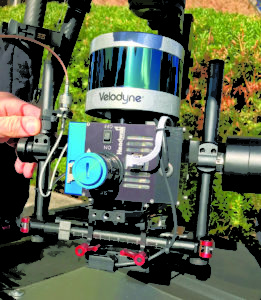
With its compact size and weight, the Hyperspec® sensor suits newer multi-rotor and fixed-wing UAVs, the preferred platform for mounting scientific sensing instruments due to their tactical efficiency.

Coastal Exploration beyond the limits of human vision

Hyperspectral sensors can see well beyond the limits of human vision, which runs to about 700 nanometers (nm). Many research projects demand the ability to see into the infrared ranges, often up to and beyond 2500nm.

With such precise vision, it is possible to detect the early signs of stress and disease on coral, vegetation and crops, with enough time to mitigate the problem. The use of imaging in the infrared ranges optimises scientific learning about coastal exploration, geological deposits and climatology and many other applications.

Sensors might collect literally hundreds of spectral bands per pixel, meaning the amount of useful data is enormous.

Speak to PAS and explore the possibilities of hyperspectral vision for your industry.

Images courtesy of Queensland University of Technology.