
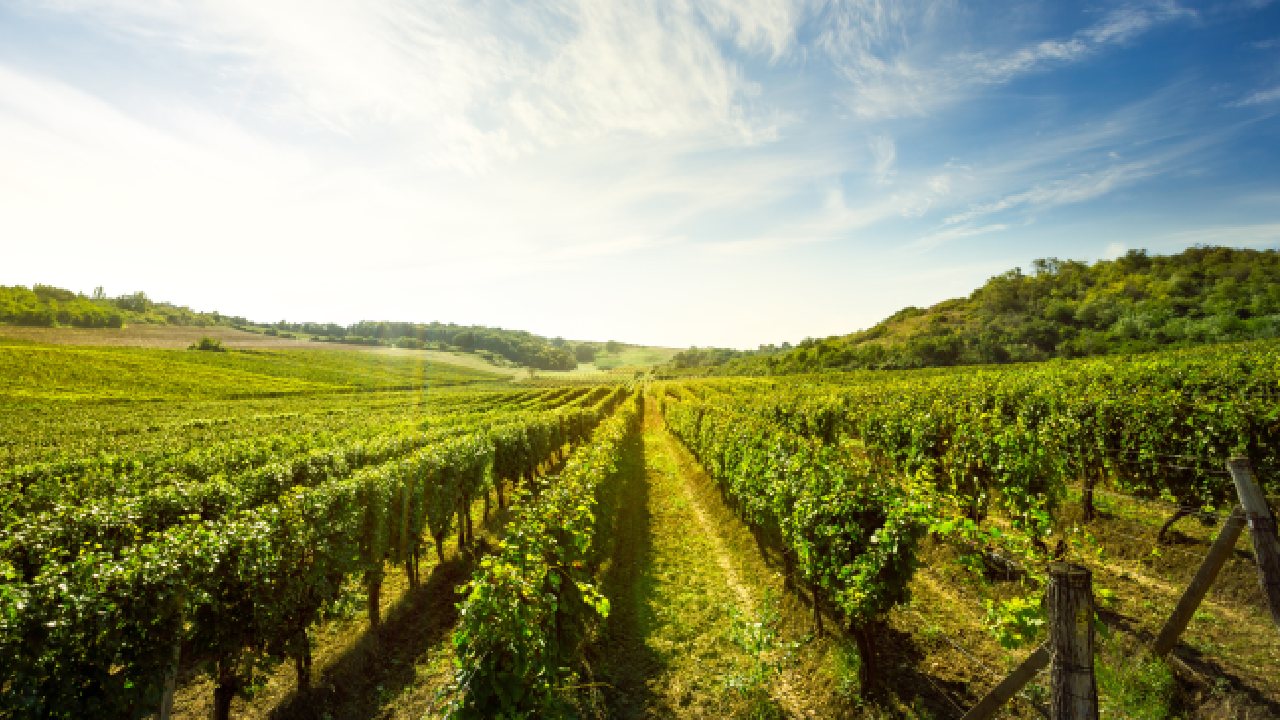
Australians love their wine—and the numbers back it up. With over 2,100 wineries producing more than 1.3 billion litres of wine in 2023, Australia’s wine industry continues to be a global force built on quality, scale, and innovation (1).
But behind every bottle is a complex world of viticulture where climate, soil, and nutrient management all converge to impact grape quality. Among these variables, managing vineyard nutrition remains one of the most critical—and challenging—factors in ensuring a productive and profitable harvest.
This article explores how precision ag enhancing traditional tissue sampling methods. We’ll cover the challenges of nutrient monitoring, how hyperspectral sensors and AI are making strides, and the role of satellite-guided platforms like MyEV in advancing precision agriculture.
What Is The Role of Precision Ag in Vineyards?
Precision ag refers to the use of advanced technologies—like sensors, satellites, and AI—to monitor, analyse, and manage crop inputs with incredible accuracy. In viticulture, it’s helping growers understand nutrient variability, reduce waste, and optimise vine health.
The Problem With Traditional Nutrient Monitoring
Vineyard nutrient management has long relied on tissue testing at bloom and veraison. While it’s considered the gold standard, this method is costly, labour-intensive, and lacks spatial precision.
- Manual sample collection is expensive and time-consuming
- Averages mask variability between vineyard blocks
- Single-point sampling doesn’t represent the entire vineyard
This limitation leads to either over- or under-applying nutrients, affecting yield, fruit quality, and environmental sustainability. Growers need better, more efficient tools to manage vineyard variability.
Enter Hyperspectral Sensors and AI
Sensor technology is redefining how we assess plant health. Hyperspectral cameras mounted on drones or ATVs capture reflectance data across hundreds of wavelengths, identifying signs of nutrient stress.
- Cameras scan full canopies, not just individual leaves
- AI models interpret data to estimate canopy traits
- Sensors detect macronutrients like nitrogen and potassium
Universities like WSU (2) have tested these systems across various vineyards, integrating them with AI for more accurate and practical data interpretation.
➤ Curious how tech like spectroscopy is shaping the future of farming? Explore how it’s advancing precision ag and sustainability in this article
Field Trials and Data-Driven Insights
Between 2020 and 2024, 17 vineyard field trials were conducted across Washington, Oregon, California, and Virginia as part of the HiRes Vineyard Nutrition Project (3), coordinated by the National Grape Research Alliance (4). The multi-institutional team included researchers from Washington State University, Virginia Tech, the USDA-ARS in Oregon, and the University of California.
The trials investigated how effectively sensor technology could assess vine nutrient status—particularly nitrogen, potassium, and magnesium—under real-world vineyard conditions. Researchers also compared various tissue types and sampling time points:
- Leaf blades at veraison were most accurate for assessing nitrogen in wine grapes
- Bloom-time petioles performed best for table and raisin grapes
- Dormant canes and spring shoots were also tested to evaluate stored nutrient reserves
In parallel, Cornell University developed a satellite-informed sampling method to guide more efficient and representative tissue collection (5). These findings are now shaping updated nutrient monitoring guidelines and enabling more precise, cost-effective fertiliser applications.
Precision Management in Action
With season-long sensor monitoring, growers can now map vineyard variability and manage inputs more precisely. Variable-rate fertiliser applications are becoming standard in precision ag.
- Nutrient maps built from AI, yield, and symptom data
- Spreaders with rate controllers adjust application by zone
- MyEV platform supports implementation for growers
Cornell and RIT’s integrated system turns raw sensor data into actionable management tools, offering growers the opportunity to enhance productivity while minimising waste.
➤ Ever wondered how today’s vineyard sensors evolved? Discover the fascinating history of spectral imaging and its journey into modern agriculture.
Economic Tools and Grower Support
Recognising the need for accessible solutions, the research team developed free decision-support tools for growers and consultants.
- MyEV helps interpret test results and guide fertiliser rates (6).
- Oregon State’s web-based model forecasts economic outcomes (7).
- Extension outreach supports grower training and adoption
These tools address common challenges faced by growers, such as determining application rates and interpreting tissue data, making precision ag more accessible across vineyard operations.
➤ Smart digital farming is redefining the future of agriculture— see how connected technologies are transforming the way we grow and manage crops.
Bridging Research and Real-World Practice: How PAS Enables Precision Ag
The pioneering research behind tools like hyperspectral sensors, satellite-informed sampling, and AI-driven vineyard mapping is reshaping how growers approach nutrition and variability. At Portable Analytical Solutions (PAS), we share this commitment to innovation by making advanced agricultural technologies accessible at ground level.
PAS supplies a range of portable, field-ready instruments that bring the benefits of precision ag directly to growers. These solutions are designed to provide rapid, non-destructive insights into soil health, crop nutrients, and plant status—right where decisions are made.
- Real-time analysis of soil, leaf, grain, and crop nutrient levels
- Portable, rugged instruments built for use in tough field conditions
- Lab-grade accuracy in compact, easy-to-use formats
- Precision tools tailored to viticulture, horticulture, and broadacre farming
By integrating this technology into daily practice, PAS helps bridge the gap between cutting-edge research and real-world agricultural impact—making it easier for growers to make confident, data-driven decisions.
➤ Explore our range of cutting-edge tools here.
The Future of Vineyard Nutrition Lies in Precision Ag
Precision ag offers vineyard growers a smarter, more sustainable way to manage nutrients. By combining sensors, AI, and satellite data, growers can now monitor variability in real time and apply inputs with confidence.
While not every grower may adopt precision ag immediately, the findings and tools developed through this research improve the entire nutrient monitoring process. From traditional testing to high-tech mapping, the path to better vineyard health is clearer than ever.
Sources: