Notice: PAS has relocated to Unit 1, 11 Pinnacle Place, Somersby NSW 2250

Portable analytical Solutions logo

Monitoring Bleaching of the Great Barrier Reef with Hyperspectral Cameras and UAVs

Monitoring Bleaching of the Great Barrier Reef with Hyperspectral Cameras and UAVs 2

A recent article in UAS Vision, an online UK-based publication specialising in UAV news, has highlighted the revolutionary use of UAVs with Hyperspectral Cameras as demonstrated by two of our many innovative clients in Australia.

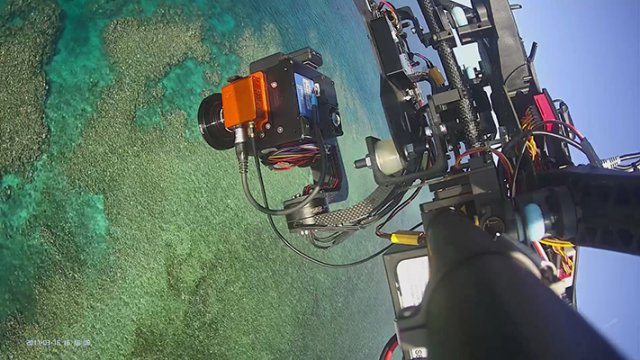
QUT’s remote sensing and unmanned aerial vehicle (UAV) experts are partnering with the Australian Institute for Marine Science (AIMS) to test whether small drones, machine learning and specialised hyperspectral cameras can monitor the Great Barrier Reef more quickly, efficiently and in more detail than manned aircraft and satellite surveys. QUT’s project leader Associate Professor Felipe Gonzalez said the team surveyed three reefs in the Great Barrier Reef Marine Park from 60 metres in the air while AIMS divers recorded precise levels of coral bleaching from under the water.

“By taking readings from the air and verifying them against the AIMS data from below the surface, we are teaching the system how to see and classify bleaching levels,” said Professor Gonzalez an aeronautical engineer from QUT’s Institute for Future Environments and Australian Centre for Robotic Vision. “Flying 60 metres above the water gives us a spatial resolution of 9.2 centimetres per pixel, which we’ve found to be more than enough detail to detect and monitor individual corals and their level of bleaching.

“This is great news for us because low-altitude drones can cover far more area in a day than in-water surveys and they’re not hampered by cloud cover as manned aircraft and satellites are – a system like this has the real potential to boost the frequency of monitoring activities in an economical way. The more data scientists have at their fingertips during a bleaching event, the better they can address it. We see small drones with hyperspectral cameras acting as a rapid response tool for threatened reefs during and after coral bleaching events.”

Roughly the size of Japan, the Great Barrier Reef is home to around 3,000 reefs stretching 2,300 kilometres, making it slow and costly to survey using traditional methods. Miniaturised hyperspectral cameras are key to the new aerial system. Not long ago, these cameras were so large and expensive only satellites and manned aircraft could carry them.

Standard cameras record images in three bands of the visible spectrum – red, green and blue – mixing those bands together to create colours as humans see them. Professor Gonzalez said the hyperspectral camera, by comparison, captures 270 bands in the visible and near-infrared portions of the spectrum, providing far more detail than the human eye can see and at an ultra-high resolution.

“You can’t just watch hyperspectral footage in the same way we can watch a video from a standard camera – we must process all the data to extract meaning from it,” Professor Gonzalez said. “We’re building an artificial intelligence system that processes the data by identifying and categorising the different ‘hyperspectral fingerprints’ for objects within the footage.

“Every object gives off a unique hyperspectral signature, like a fingerprint. The signature for sand is different to the signature for coral and, likewise, brain coral is different to soft coral. More importantly, an individual coral colony will give off different hyperspectral signatures as its bleaching level changes, so we can potentially track those changes in individual corals over time.

“The more fingerprints in our database, the more accurate and effective the system.”

Professor Gonzalez was one of three QUT researchers speaking at the World of Drones Congress in Brisbane, joining Professors Des Butler and Tristan Perez on the two-day program. QUT’s drone and remote-sensing innovations were on show at the congress’ accompanying expo, highlighting research advances in marine robots (COTSbot), agricultural robots (Ag Bot II), and in using UAVs to detect and monitor both pests and gas leaks.

QUT was the principal academic sponsor of the World of Drones Congress, which ran 31 August to 2 September.


Ⓒ UAS Vision 04/09/2017. Reprinted by permission.
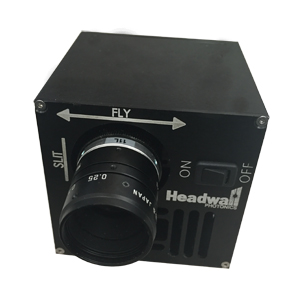
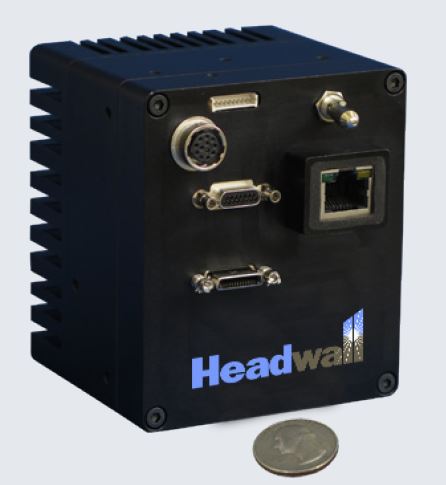
Hyperspec Nano

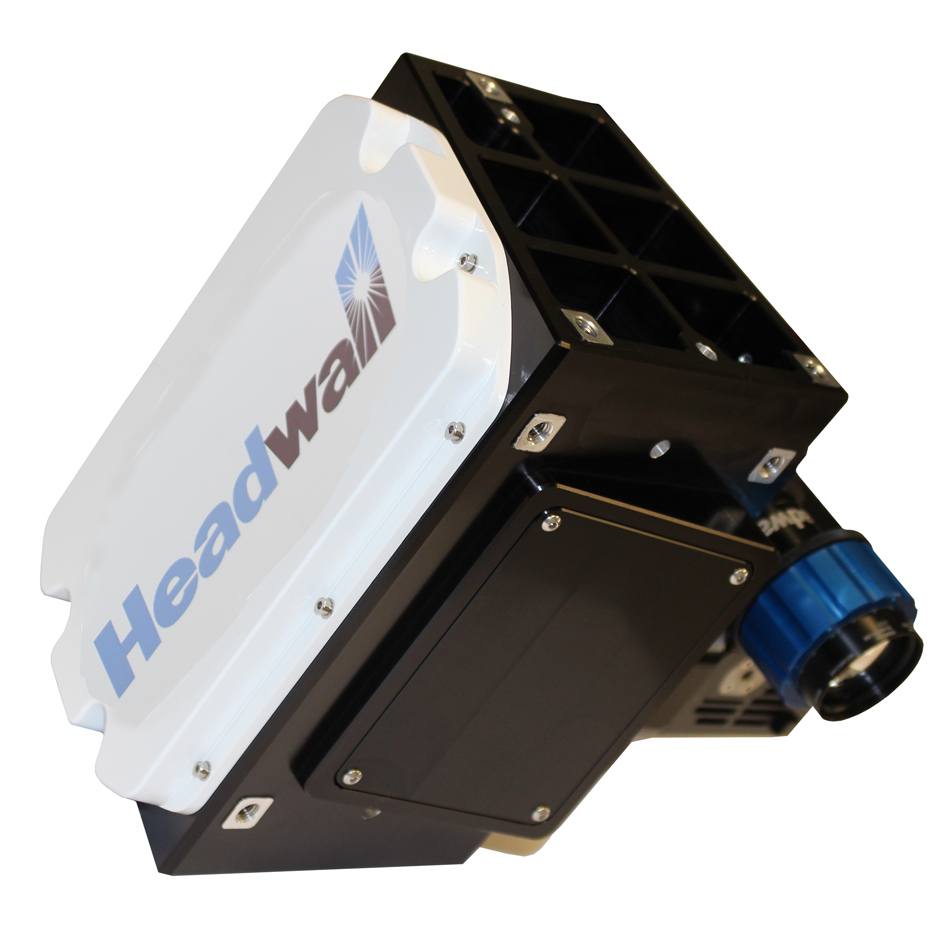
Headwall’s new Nano-Hyperspec® is a completely integrated hyperspectral sensor designed for the VNIR (400-1000nm) spectral range.

A completely integrated lightweight (<0.52kg) VNIR hyperspectral sensor for small UAV applications that includes on-board data-processing/storage and GPS/IMU. Today’s UAVs are exceptionally small and light and they demand payloads to match.

A key advantage of Nano-Hyperspec is that it also includes 480GB of on-board data collection/storage, plus attached GPS/IMU functionality. This allows the payload bay of the UAV to be optimized for other needs such as video or thermal imaging. Weight and space is saved, making for a more efficient airborne solution.

Nano-Hyperspec is perfect for today’s new breed of hand-launched UAVs and drones, representing a mix of fixed-wing and multi-rotor models to meet practically any deployment scenario.

How to Apply the HyperSpec Nano

Agriculture / Viticulture / Vegetation

Speak to PAS for expert guidance on hyperspectral imaging options from Headwall Photonics.

HyperCore

Headwall’s HyperCore™ Data Processing Unit manages the high-speed computing function for airborne applications in a small and very light package.

HyperCore™ is a small and powerful storage and management system that synthesizes the data streams from hyperspectral sensors plus a range of other instruments commonly used in airborne applications. Combining HyperCore™ with Headwall’s Micro-Hyperspec® sensor yields a solution that is the lightest and smallest in the industry. This means more payload budget for other instruments, such as LiDAR, RGB, thermal, and FODIS, which can be all be connected simultaneously to the unit.

How to Apply the HyperCore

Remote Sensing / Mining Mapping / Precision Agriculture

Speak to PAS for expert guidance on hyperspectral imaging options from Headwall Photonics.

Hyperspec Inspector

Hyperspec Inspector

Headwall Photonics -Spectral Imaging

Hyperspec Inspector 8

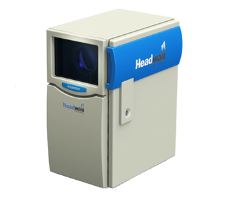
Headwall’s Hyperspec® Inspector™ is a fully integrated hyperspectral inspection instrument providing reliable, repeatable spectral and spatial measurement for in-line or at-line, high volume manufacturing process lines.

The Inpector is designed for operation in harsh manufacturing and processing environments.

  • Available in versions for VIS, VNIR, NIR and SWIR spectral ranges
  • In-line or at-line process inspection
  • Very fast frame rates, up to 236 fps
  • Integrated data processing and storage unit

How to Apply the Headwall Inspector

Advanced Machine Vision / Food Production / Pharmaceuticals / Process Analysis / Waste Management

Speak to PAS for expert guidance on hyperspectral imaging options from Headwall Photonics.

Hyperspec SWIR

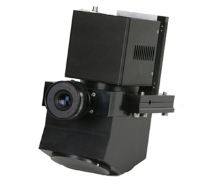
Headwall’s Hyperspec SWIR imaging spectrometer provides unparalleled spectral and spatial performance in the short wave infrared spectral region of 950 to 2500 nm. The sensor provides a complete spectrum of image data for every pixel within the field of view.

Hyperspec SWIR is available in two configurations: as a lens-based imager or as a multi-channel/multi-point spectrometer.

Each model provides different capabilities to support application requirements such as frame rates, dynamic range, region of interest binning, price, and more.

  • The industry’s smallest SWIR hyperspectral sensor
  • Standard model has 267 spectral channels and 384 spatial channels
  • Standard maximum frame rate is 450Hz
  • Stirling-cooled MCT detector

How to Apply the HyperSpec SWIR

Mining and Exploration / Process Manufacturing / Remote Sensing

Speak to PAS for expert guidance on hyperspectral imaging options from Headwall Photonics.

Hyperspec VNIR

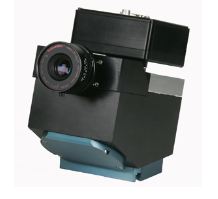
Hyperspec VNIR imaging sensors encompass a broad range of models with capabilities and price points to suit any application.

Designed for use in the 380nm – 1000nm spectral range, they are available as lens-based imagers or as multi-channel, multi-point fiber instruments.

With different options for imaging performance, frame rates, and data management, users can select among three sensor models within the Hyperspec VNIR family: the N-Series, the A-series and the E-series.

  • Expansive capabilities for superior spectral sensing
  • Variation in spatial bands and spectral bands between N, A and E series
  • CameraLink connectivity to suit application
  • Non-contact analysis

How to Apply the Hyperspec VNIR

Medical / Process Monitoring and Control / Over-Conveyor Inspection

Speak to PAS for expert guidance on Hyperspectral Imaging options from Headwall Photonics.

inno-spec UV Hyperspectral Imaging System

inno-spec UV Hyperspectral Imaging System

Headwall Photonics hyperspectral Imaging

The UV Hyperspectral Imaging System is a ready-to-use solution for capturing and analyzing UV hyperspectral images.

Biomedical, pharmaceutical, agricultural, and forensic applications can benefit from hyperspectral imaging in the UV wavelength range. Headwall company inno-spec GmbH offers the BlueEye UV sensor with a uniquely deep range down to 220 nm, making it ideal for advanced hyperspectral imaging needs. It can be purchased as part of a full scanning kit with an illumination system, motorized scanning stage, enclosure, and even an ozone mitigation system!

UV Hyperspectral Imaging System Features

The plug-and-play inno-spec UV Hyperspectral Imaging System contains:

  • UV hyperspectral camera (inno-spec BlueEye TEC) with HSI sensor covering UVA, UVB and UVC
  • UV scanning stage (Speccer) with adjustable sensor and illumination height
  • UV lamp
  • Enclosure for UV safety
  • Ozone mitigation system*
  • Compact desktop computer
  • perClass Mira® data acquisition and
    analysis software
  • CE/RoHS certified, robust design

Key Features Of inno-spec BlueEye TEC sensor

  • 1750 spectral pixels
  • <2 nm spectral resolution
  • Adjustable spatial and spectral ROI
  • USB 3.1 Type-C interface
  • Lens focal length options:
  • 25 mm, 35 mm, 50 mm, 75 mm, 105 mm
inno-spec UV Hyperspectral Imaging System 11
inno-spec UV Hyperspectral Imaging System 12
inno spec uv enclosure

Applications for the inno-spec BlueEye UV System

Biomedical / Pharmaceutical / Food Safety / Chemical Analysis / Forensics / Quality Control

Speak to PAS for expert guidance on hyperspectral imaging options from Headwall Photonics.

Technical Specifications

Wavelength Range220 - 380 nm
Spectral Resolution (FWHM)2048 x 1750
Pixels* (spatial x spectral)< 2 nm (with 80 μm slit)
SensorCMOS, Back-Illuminated
Pixel * Pitch6.5 μm x 6.5 μm
Numerical Aperturef/2.4
Maximum Frame Rate40 fps (Full-Frame)
ADC Bit Depth16-bit (2 x 12-bit ADC at Low- and High-gain)
Digital InterfaceUSB 3.1 Type C (Sensor); USB 2.0 (Stage)
Sample Scan Speed1 – 80000 μm/s
IlluminationBroadband Xenon Arc Lamp
Safety EquipmentInterlocked Enclosure and Ozone Scrubber
BlueEye TEC Weight (without lens)1.9 kg
Cooling TechnologyTEC + Forced Air
BlueEye Tec Dimensions (without lens)138 mm x 87 mm x 204 mm
System Weights - Stage + Enclosure64 kg
System Weights - Lamp3.7 kg
System Weights - Lamp Power Supply5 kg
System Weights - Ozone Scrubber27 kg
Enclosure Dimensions853 mm x 492 mm x 960 mm
Input Voltage88 – 267 VAC (47 – 63 Hz)
Maximum Power30 W (Camera) + 250 W (Stage) + 300 W (Lamp)
Operational Temp Range, Humidity+10 °C to +40 °C, 10 – 80% Non-Condensing

* The 105 mm focal length lens enables the use of all 2048 spatial pixels and provides color correction for a 250 – 650 nm spectral range. The 25, 35, 50, and 75 mm lenses reduce the useable spatial pixels to ~1750 and provide color-correction across the full spectral range.

Sample Preparation – XRF

Sample Preparation – Bench Top XRF

Fluxana XRF Analyser

Sample Preparation - XRF 14

Fluxana delivers all types of accessories, equipment and certification for users of XRF technology.

Standards

XRF analytical instruments require certified reference materials to establish a calibration curve ensuring the analysis of inorganic compositions of a substance or product to meet the expectations and quality assurances of institutions, companies and customers.

Sample Prep press

The Fluxana Sample Prep press is available in three models, the Vaneox – 15T manual Press, 25t manual Press, the Vaneox – 25t automatic press and the Vaneox – 40t automatic press. Fluxana offers a number of tools to assist with the sample prep press process: table, die, rings, mixer, Boreox, mills, cups, pellet film, binder and sample storage.

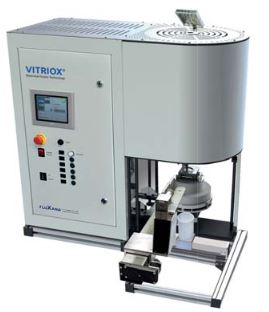
Vitriox Fusion Machine

Electrical fusion technology is used to prepare samples to be analyzed with an X-ray fluorescence instrument. It is also used to improve precision over pressed powder technology. The machine offers fully automatic cold to cold operation for 1, 2, 4 or 6 samples (1 sample at a time.)

Sample Preparation - XRF 15

Speak to PAS for expert advice on the best solution for your XRF needs.

Hyperspec Fluorescence Sensor

Hyperspec Fluorescence Sensor

Headwall Photonics –Spectral Imaging

Hyperspec Fluorescence Sensor 17

Headwall’s HyperSpec High-Resolution Fluorescence Sensor is an all-reflective concentric imager designed for Chlorophyll Fluorescence imaging across large geographical regions.

The spectral range is roughly 755nm – 775nm but this solution exhibits high spacial/spectral resolution plus high SNR for low-light performance.

  • Compact rugged design, smaller and lighter than previous generation products
  • Aberration-corrected high-throughput optical sensor design
  • Pixel binning available
  • Optimised for use with aircraft, UAVs and satellites

How to Apply the HyperSpec Fluorescence Sensor

Remote Sensing / Environment / Precision Agriculture

Speak to PAS for expert guidance on hyperspectral imaging options from Headwall Photonics.

Agilent 5500 FTIR

Agilent 45500 Series FTIR

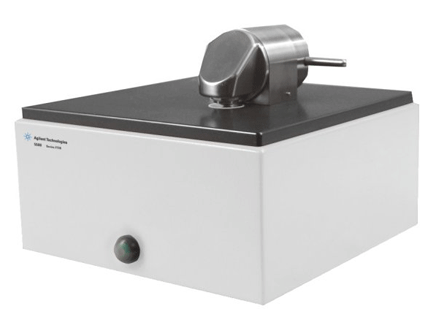
The Agilent 5500 Series Fourier Transform Infrared (FTIR) instruments are advanced mid-infrared region spectrometer platforms that offer the same capabilities as larger and more traditional FTIR spectrometers. However, they are designed to be smaller in size, easier to maintain, and more affordable.

These instruments are specifically designed to provide precise results in material analysis without the complexity, high maintenance requirements, or expensive costs associated with larger FTIR spectrometers. The Agilent 5500 Series FTIR instruments offer accurate and reliable performance, making them an excellent choice for a variety of applications in different industries.

Agilent 5500 FTIR 18
Agilent 5500 FTIR
agilent 5500 testing
two women in a lab using the agilent 5500 series FTIR

The Agilent 5500 Series FTIR is a powerful tool that features:

  • Longer path length capabilities in transmission spectroscopy in a user-friendly format similar to ATR with the 5500 DialPath analysers.
  • Quick analysis of samples by placing a single drop of liquid on the surface of the 5500t analyser and rotating a second window into position to sandwich the sample.
  • Available with one, three, or five reflection-diamond ATRs, catering to various applications, including single-reflection diamond ATR for solids and liquids identification and multi-reflection ZnSe ATR for liquid analysis.
  • Intuitive, method-driven, multi-language software that guides users through every step of the operation, ensuring ease of use. The software features colour-coded alerts to confirm whether samples meet specifications.
  • MicroLab Quant provides a simple, guided quantitative methods development package, making it easy to develop and optimise quantitative methods quickly and efficiently.
  • Optional MicroLab Pharma supports compliance with data integrity regulations, ensuring accurate and reliable data analysis.

How To Apply The Agilent 5500
Chemical Analysis / Oil Analysis /

Speak to PAS for expert guidance on FTIR analysers such as the Agilent 5500 Series.