Applications

Niton XRF Analyser Application Information

PMI Application

The Niton range of analysers lead the world in rapid identification of the alloying chemistry in thousands of alloy grades. This is critical in the Petrochemical, Gas and Oil industries were accident prevention is critical or in Engineering and Fabrication operations looking to ensure the quality of their products meets the high standards set by customers.

Some of the alloys that can be indentified include:

  • Stainless steels; Cr-Mo steels; Low allow steels; Tool Steels
  • Nickel alloys; Copper alloys; Titanium alloys; Aluminium alloys; Zircon and Tantalum alloys

PMI analysis

  • Rods and wire strands
  • Finished Welds and weld beads
  • Bolts, rivets and fasteners
  • Valves and flanges
  • Integrity of pipes, valves and flanges

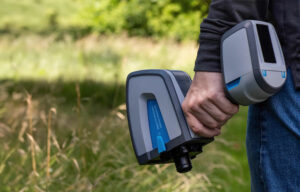
Thermo Scientific Niton analysers brings true lab-quality performance to handheld XRF with class leading analysis speed and sensitivity including a number of light elements (Magnesium, silicon, phosphorus and sulphur) in air.

Metal Fabrication

Now you don’t have to risk your business and its reputation with in-accurate material identification. The Niton hand held XRF analyser allows you to take control of both incoming and outgoing materials and maintain quality checks throughout the manufacturing and engineering process.

Lab quality results are available instantly allowing quick decision making with total confidence. Fast, accurate analysis and positive identification for your manufacturing requirements:

  • Components
  • Wire Strands
  • Rods
  • Finished welds
  • Bolts, rivets and other fasteners
  • Complete fabricated assemblies

The Niton GOLDD series has advanced technologies that lead the world in light element detection and analysis including

  • SS alloys containing silicon
  • Titanium alloys
  • Aluminium and silicon bronzes
  • Aluminium with silicon and magnesium content

The time consuming task of sending off samples to the lab can now happen on the factory floor saving time and money.

Scrap Recycling

With the Niton hand held XRF you are able to analyse nearly every element of interest in virtually all types of metal alloys from trace levels to pure metals and everything in between. The simple point and shoot process is easy, fast and accurate with a readout instantly available on the screen of the analyser. More importantly you avert possible mix ups or incorrect identification saving you time and money.

Thermo Scientific has been working closely with the scrap industry for a number of years and has developed a substantial library of metal alloys. The units have been constructed to take the rigours of daily punishment in industrial situations.

Families of alloys that can be accurately analysed:

  • Stainless steels
  • Copper alloys
  • Nickel alloys
  • Titanium alloys
  • Cobalt alloys
  • Wrought aluminium alloys
  • Ni/Co alloys
  • Low alloy steels
  • Chromium-molybdenum (Cr-Mo) steels
  • Zirconium (Zr) alloys
  • Exotic alloys (Tantalum, hafnium and tungsten)

With the GOLDD series of analysers you get an edge with

  • Fastest alloy identification
  • Superior detection limits for trace/tramp elements
  • Unrivaled light element performance
  • True lab-quality performance in a hand held instrument

Flow Corrosion

Safety and accident prevention has never been more important in the Petrochemical and Gas industries. With a high level of accidents attributed to pipe and valve failure the need for positive material identification (PMI) is now critical.

With the Thermo Scientific Niton hand held analyser you now have class leading technology in the palm of your hand for rapid and accurate positive material identification. Lab–quality results are available instantly for:

  • Rapid verification of alloys
  • Recover of lost material traceability
  • Isolate finished welds to validate filler material and dilution
  • Confirm the integrity of processing piping, valves and other components

Around the world Oil, Gas, Petrochemical, Pharmaceutical and Power Generation Industries rely on the Niton hand held XRF for daily operational safety and plant maintenance.

Welds and welding material

The Niton hand held XRF analyser are used for positive materials identification for welded materials and final joint inspections at various stages of the manufacturing or maintenance including incoming goods inspection, in-process verification and final product inspection.

The overall integrity of welded joints depends on a number of factors including, correct material preparation, verification of the base material and the use of the correct filler alloy. The Niton hand held analyser can be used to verify single welding rods, spools of weld wire or a solidified sample of puddle material to verify the filler material prior to the welding operation.

The XL3 series of Niton analysers has an optional small spot feature with CCD camera for weld bead analysis. So getting into tight spaces or small weld areas is easy. All information is catalogued within the unit including the image and can be printed on a certificate of verification if required.

Key benefits

  • Fast accurate results in seconds
  • Point and shoot simplicity
  • Laboratory quality results
  • Easy verification of weld materials
  • Totally non destructive.
  • Light weight and rugged
  • Optional small spot feature for weld bead analysis with CCD camera imaging

Consumer Goods

Toxicity in consumer goods has proven to be problematic for a number of large companies with catastrophic costs involved in many consumer cases. The Niton hand held XRF safeguards both the supplier/retailer and consumer from possible toxic elements in goods averting potential health issues and legal suits.

Incoming goods inspection or on-shelf examination of existing stocks is easy with the Niton analyser. The light weight point and shoot simplicity allows staff to operate the analyser with minimal training ensuring large volumes of goods can be quickly screened in the most efficient, cost effective and practical way.

A simple pass/ fail alert can be set up on the screen with elemental chemistry contained in the back ground for further reporting or analysis.

Key benefits

  • Simple to use with minimal training required
  • Fast , accurate lab-spec results
  • Totally non destructive
  • Simple pass/fail screen setup
  • Portability-testing can occur at any number of locations from the dock to the warehouse.

Environmental

The identification and remediation of environmental contaminants is a major and costly challenge. Thermo Scientific Niton analysers allow you to perform rapid on the spot analysis screening for elemental identification of hazardous materials.

The lightweight Niton is designed for field work with a rugged chassis and simple operation. Just point and shoot with data available in seconds and displayed on the colour touch screen. All data is stored and is totally tamper proof with the ability to down load directly to your PC.

The process is totally non destructive significantly reducing the cost time and labor involved in site characterization, stabilization and remediation allowing for instant decisions on the spot.

Key benefits

  • Immediate sample results on-site
  • Real –time delineation of contamination boundaries
  • Lower detection limits for Sulphur, phosphorous and chlorine
  • Ability to see toxic analysis in liquids at less than 10ppm

Mining

Having to hand immediate, accurate geochemical results in the field is critical for mining and exploration operations. Thermo Scientific Niton hand held XRF analysers give you on-site lab spec data in seconds in the palm of your hand saving time and money on expensive off field laboratory tests. The GOLDD range of analysers are the fastest hand held XRF in the world with the ability to measure light elements (Mg – S) in air.

They deliver fast, accurate elemental analysis for intensive metals exploration whether for base metals, precious metals and rare earth elements. Upgraded software programs now allow for pseudo element calculations and the test all GEO function will automatically set which application mode is applicable saving time and money.

Key Benefits

  • Fastest detection times and the lowest limits of detection
  • Light element analysis in air (Mg-S)
  • Test all GEO function
  • Pseudo element program
  • Rugged and light weight
  • In-field lab spec data

Art and Archeometry

Fast, accurate qualitative data in the field is invaluable to archaeologists or conservators. Whether the task is reconnaissance surveys, site mapping or establishing provenance the Niton hand held XRF analyser is the perfect tool for the job.

With the ability to identify and quantify virtually any element from Magnesium through to Uranium the Niton XRF analyser is the perfect portable archaeometric analysis tool. By performing in-situ soil analysis at site of suspected prehistoric or historic activity the user can identify areas such sub-surface features, hearth areas, fire pits, burial grounds and more.

Archaeometry sample types: Clays and ceramics, soils, lthic material, textiles, alloys, paintings, pigments, glazes, construction materials, clothing, bones and teeth, precious metals

Key benefits

  • Lowest limits of detection
  • Light element detection in air (Mg,Al,Si,P,S)
  • Optional CCD camera for sample imagery and storage
  • USB transfer to your PC for all data, GPS connectability, Bluetooth enabled

ASD Application Information

Mineral Exploration

Reflectance spectroscopy is applicable for rapidly characterising many of the alteration assemblages associated with economic deposits. Since these assemblages define mineralogical and geochemical halos associated with economic mineralisation and can be recognised beyond the obvious limits of ore deposits, they allow remote detection via portable NIR reflectance spectroscopy.

ASD developed the TerraSpec® Portable NIR Mineral Analyser as a user-friendly, rapid, field-portable system for characterising hundreds of mineralogical samples per day. The TerraSpec adapts easily to different environments: the laboratory, the field, or a drilling site providing real-time information necessary to optimise your exploration process. The system can be used to develop a wide range of models for analysing many sample types, including outcrops, hand specimens, core, RC drill chips, and metallurgical pulps—all with little or no sample preparation.

  • Iron and other transition elements
  • Minerals such as hematite, goethite, garnets, and pyroxenes
  • Rare Earth Element (REE) minerals
  • Ammonium minerals
  • Hydroxyl containing minerals such as amphiboles, epidotes, apitites, tourmalines, topaz, diaspore, and many of the arsenates
  • Hydrous silicates such as opal, beryl, and zeolites
  • Clays
  • Micas
  • Other phyllosilicates such as serpentines and chlorites
  • Sulfates
  • Hydroxides
  • Carbonates

General Chemical Analysis

Chemical applications, whether in manufacturing or scientific research, require precise determination and characterisation of chemical components. Traditional laboratory techniques such as titration and chromatography require time consuming sample preparation, expensive process chemistry, testing time, and produce chemical and sample waste. Near-infrared (NIR) spectrometry is an established quantitative chemical analysis technique for testing the chemical components and purity of many raw or in-process materials, and finished product. NIR is a proven and cost-effective, easy to implement platform, offering a practical alternative to time-consuming and costly traditional laboratory analyses.

ASD LabSpec offers measurement solutions and quantitative chemical analysis equipment that work in just about any environment, helping you to meet regulatory standards and achieve production goals. ASD’s spectrometers are state-of-the-art, rugged instruments for superior qualitative and quantitative measurement of physical properties and chemical composition using reflectance, absorbance, or transmittance spectroscopy methods.

  • Rapid, real-time results
  • Research grade analysis
  • Little or no sample preparation
  • Measure multiple constituents simultaneously
  • In-situ and non-destructive sampling

Biofuel Analysis

The use of biofuels derived from plants and renewable materials is growing steadily, driven by socioeconomic demands for more responsible use of natural resources with less negative impact on the environment. Additionally, researchers are doing biofuel research on other agricultural by products such as cellulosic feedstocks and algae, which hold the promise of greater sustainability and capacity.

ASD LabSpec analysers is ideally suited to the measurement of combination and overtone absorptions of C-H, O-H, and N-H, bonds, common in nearly all organic systems. NIR is, therefore, applicable to almost all qualitative and quantitative (concentration) analyses of organic systems. By using NIR to measure biolipid parameters, processors can make the necessary adjustments during the process to account for variations in levels of moisture and Free Fatty Acids (FFAs).

Through precision measuring of moisture prior to purification, the necessary amount of drying agent and or the correct timing to heat the biolipid (oil or fat) to remove free water can be assessed more accurately. Any remaining water in the process can promote the saponification reaction and inhibit the transesterification reaction.

ASD LabSpec can reliably and accurately quantify levels of key parameters in raw fuel material, including:

  • Moisture
  • Total Glycerin
  • Glycerides (mono, di, and tri)
  • Fatty acid ethyl esters (FAEEs)
  • Fatty acid methyl esters (FAMEs)
  • Viscocity
  • Cloud point

Plastics

ASD LabSpec portable, benchtop, and at-line Vis/NIR systems provide an ideal measurement solution for determining the identifying raw material properties prior to introduction into a manufacturing process, as well as analysis of in-process material characteristics and finished product. With real-time, in situ measurements, analyses traditionally performed in a laboratory setting can now be conducted where and when required.

ASD LabSpec instruments are perfectly suited for measuring the thickness of individual layers in co-extruded multi-layer plastics and films, discriminating between compositionally different, but visually similar, plastic bags, bottles, vials, caps and more. The ability to quantify plasticisers, or a combination of plasticisers, during production empowers the manufacturer to be proactive in ensuring more efficient production performance and economical processing.

Qualitative and quantitative analysis:

  • Medical plastics and packaging
  • Pharmaceuticals and nutraceuticals
  • Films
  • Cosmetics
  • Chemicals
  • Food and beverage

Explosives

ASD LabSpec is a safe, reliable, convenient, and environmentally friendly technology for rapid on-site, in situ identification and physical characterisation of chemicals, solid explosives, and propellants. Constituents such as oxidisers, fuel, plasticisers, catalysts, solvents, binders, and modifiers all have near-infrared spectral signatures (direct measurements of the reflectance or absorption of light) that allow for their quantification. This makes NIR the ideal tool for explosives research, monitoring the process of blending and curing during manufacture, as well as quality control analysis of the finished product.

In addition to composition, NIR allows for the prediction of properties such as burn rate and stability to your explosives analysis. Since it is possible to perform NIR analysis non-destructively on finished cast components, 100% quality control is possible.

  • Rapid, real-time results
  • Ability to measure multiple constituents simultaneously
  • Research grade analysis
  • No sample preparation
  • In-situ and non-destructive sampling

Grains

ASD Field Spec and LabSpec instrumentation has proven itself superior for rapid and accurate in-field identification and analysis of many constituents, including lutein, cellulose, hemicellulose, lignin, protein, moisture, ash, glucan, xylan, carbohydrates, and chlorophyll values. Both farmers and industry stand to realise better returns on their investment with analysis of crops prior to harvest—better determination and classification of crop quality allow farmers to achieve higher profits, and industrial buyers can lower the risk of purchasing out-of-spec product.

ASD technology effectively measures both living plant tissue and dried plant materials. The research-grade data is also effectively used to model more complex attributes, such as herbivore feeding rates, soil nutrient requirements, and prediction of crop yield. ASD’s measurement solutions have been used successfully in a variety of vegetation analysis, including:

  • Quantification of corn, canola, and soy bean seeds (measurements of protein, moisture, fats, amino acids, and other constituents)
  • Development of lignin, cellulose, and nitrogen calibrations using spectra of whole fresh and dried ground leaves
  • Differentiation of various wood species
  • Analysis of soil nutrient status for agricultural applications

Moisture

ASD LabSpec is used for the determination of moisture which is a critical component in manufacturing processes and quality assurance. Moisture analysis is applicable across a variety of industrial applications where precise moisture in percentage amounts is monitored as a specification, or the moisture content is highly controlled for product or material integrity. Moisture analysis is commonly used in:

  • Agricultural and soil research
  • Seed and grain research
  • Biomass
  • Chemical analysis
  • Pharmaceuticals
  • Cosmetics and beauty products
  • Food and beverage
  • Geological sciences
  • Natural products and dietary supplements
  • Petroleum products
  • Pharmaceutical packaging
  • Plastics and films
  • Production mining
  • Pulp and paper products

ASD LabSpec analysers can detect the water content and activity in a wide range of materials, and over a large range of concentrations. ASD’s portable and at-line Vis/NIR systems are ideally suited for the real-time measurement of moisture with easy-to-use, non-destructive testing in just about any environment. Concentrations ranging from 0.01% and up can be accommodated by selection of the appropriate wavelength range, thus making ASD’s technology the ideal tool for accurate and flexible moisture analysis in raw and in-process materials, as well as finished product saving both time and money.

Wood and Paper

ASD has developed the industry’s first at-line analyser for simultaneous measurement of Kappa number and brightness of wet pulp. ASD spectrometers are also ideal for on-line and at-line collection of process data to validate products, increase energy efficiency of the mill and to reduce raw material costs by increasing process efficiencies. From the forest to the mill automation system, ASD spectrometers achieve critical analyses to maximize your profits and improve your product quality.

ASD measurement solutions:

  • Enhanced mill automation through rapid data acquisition and seamless process integration
  • Improved efficiency in the chip yard, bleach plant, and lime kiln operation areas
  • Elimination of hazardous, costly materials used in traditional wet chemistry techniques
  • Reduced need for highly technical operators
  • Fast, easy analysis of vital material parameters before, during, and after the pulping process for both TMP and Kraft pulp
  • Greater profitability through superior data quality, minimal operator variability, and excellent device longevity

Increased processing speed through non contact measurement provides real-time feedback to the mill’s process control DCS


Contact us for more info

For sales, general enquiries, or to
book a demo of one of our products call:

+61 2 4381 2844

Talk to an Expert

Contact PAS to discuss your possible analysis solutions. We'll get back to you as soon as possible.

Please ensure you've filled out all required(*) fields, and try again.